

EN
.avif)
app-publishers
A few years ago, hybrid monetization was just a buzzword to describe a new trend in mobile game monetization. Today, it’s a standard practice in mobile game development.
For this reason, every game developer should be familiar with the ins and outs of this monetization strategy. Let’s go over everything you need to know about hybrid monetization – from how it works, to its pros and cons, and best practices.
👀 Related reading: From models to metrics: A publisher’s guide to mobile game monetization
Hybrid monetization means combining more than one revenue model in a single game instead of relying on just one. Most developers land on one of these combinations:

The biggest reason to go hybrid with your game monetization? You reach more players.
By relying on ads alone, you're limited to users willing to sit through them for free access. Rely on IAP alone, and your revenue depends on the small slice of players who actually spend. Combine mobile app monetization strategies like these, and you cast a wider net, unlocking revenue from both spenders and non-spenders alike.
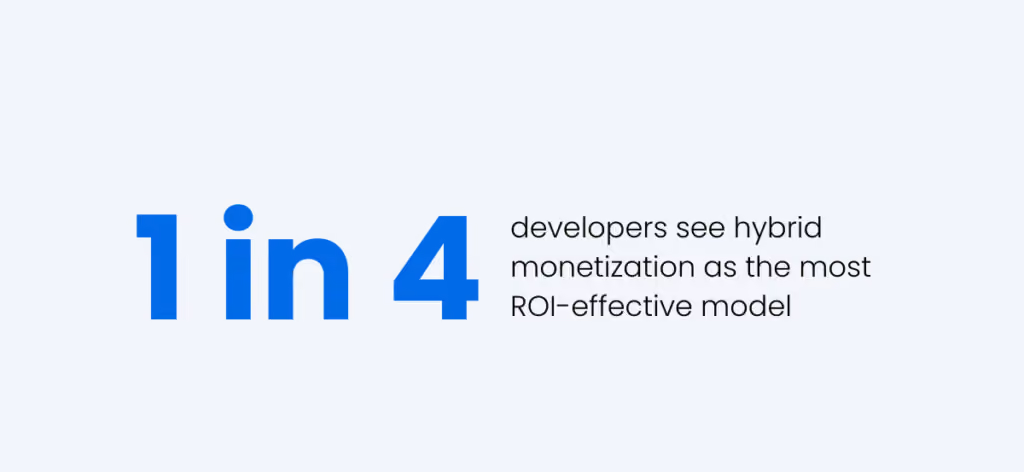
The potential of monetizing a large pool of players is the primary and most obvious strength of hybrid monetization. But, there are more advantages beyond that:
Before you go ahead and add a new revenue stream to your game, note this:
Hybrid monetization comes in many different shapes and forms, and it’s important that the combination you use makes sense for your game.
Here are some things to consider.
Many developers fear that including an additional monetization model will cannibalize the existing one. For example, there’s a misconception that including ads will negatively affect IAP spending.
Research by Facebook Audience Network has shown that 86% of developers who included both ads and IAPs in their games reported that purchasing levels remained the same or even increased.
So, as long as you carefully balance these monetization models, there’s no need to worry about them negatively affecting each other. To achieve this balance, it’s important to take on hybrid monetization from a game design perspective.
Would you remove or replace features that clutter the UI and annoy your users? Well, you should adopt the same mindset when designing your monetization strategy.
If you’re about to include ads in your monetization strategy, it’s important to be tactical about the ad formats you’ll be using. Should you go with interstitial ads, rewarded video ads, offerwalls, native ads, or banner ads?
In a hybrid monetization model, some formats perform better than others. Being aware of this can help you make better decisions and unlock higher revenues. The best-performing ad formats in a hybrid model are offerwalls and rewarded video ads.
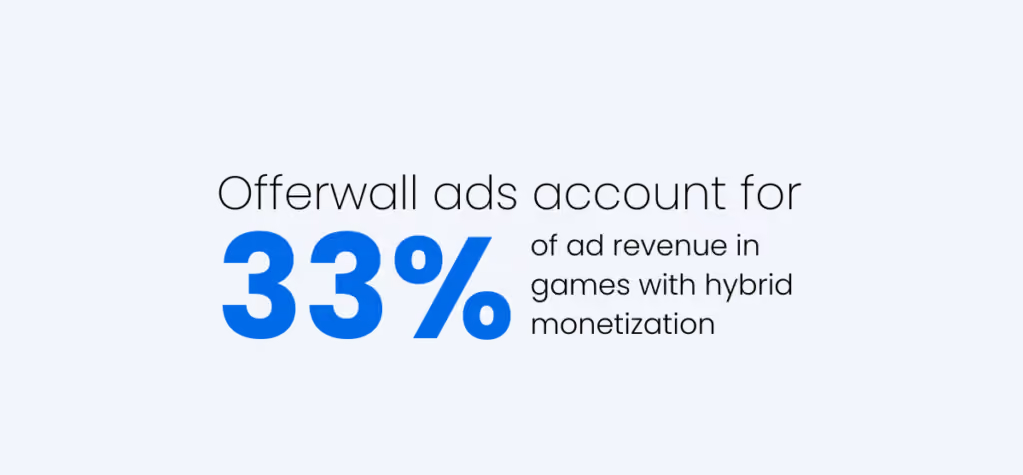
According to ironSource, players who watch rewarded video ads are 6x more likely to make IAPs. Offerwalls, on the other hand, account for an average of 33% of ad revenue in games that use a hybrid model (Unity).
These ad formats work so well in hybrid monetization because they give players a taste of in-game rewards. Thanks to this, players get a glimpse of a premium in-game experience, resulting in increased loyalty and a higher probability of making in-app purchases.
Avoid developing a one-size-fits-all hybrid monetization strategy. Instead, adopt an approach that recognizes different types of players who play your game and group them by common characteristics. For example:
Once you know your groups, tailor your approach. Show more ads to players unlikely to ever spend. For your regulars and spenders – your most valuable users – cut back on ad frequency and serve up personalized IAP offers instead.
By A/B testing changes to your monetization strategy, you can make data-driven decisions, improve performance and reduce risk.
If you’re unsure how this process should look like, here are some tips for effective A/B testing in a hybrid monetization strategy:
A few forces are driving developers toward hybrid app monetization models faster than ever.

Hybrid monetization isn't going anywhere – and as new ad formats like offerwalls continue to gain ground, it's only going to get more central to how games make money.
Let's talk about how Mistplay can help you build a mobile game monetization strategy that works for your players and your bottom line.