

EN
brands-retailers
In retail, shoppers have more choice than ever: stores, apps, and marketplaces are one tap away, and prices are easy to compare. Retailers have responded to this oversaturation with increased focus on loyalty programs, and the numbers show how crowded that space has become.
According to Statista1, the average US consumer is enrolled in around 19 retail loyalty programs, but actively uses only nine. For Deloitte2, that number is even lower, with active participation in just one or two programs.
That gap shows what a program can and can’t do. Getting a shopper to enroll is relatively easy, but earning a loyal relationship with your customers is way harder. Convenience and rewards can start that habit, but they’re a weaker glue than a real connection with the brand, and a competitor can match them.
With customer loyalty programs in retail now so common, the challenge for retailers is no longer launching one, but rather making the program a way to build that connection between brand and customer.
In this article, you’ll learn about retail loyalty programs and the benefits that both retailers and customers can get from having one. We’ll also guide you in building your own retail loyalty program, without necessarily relying on discounts and cutting your margins.
👀 Looking for a solution to boost your program engagement? Check out LoyaltyPlay
Customer loyalty, also called store loyalty, is a shopper's habit of choosing a store again and again, even when a cheaper or closer option is available.
Today, retail stores compete with both physical and online shops, and they have to build return habits on both fronts at once, so earning and keeping customer loyalty is harder than ever. Still, the investment pays off. Loyal customers choose your business more often, and they’re more likely to speak well of it: in fact, 79% of US consumers said they’re more likely to recommend a brand with a good loyalty program3.
The motivations underlying customer loyalty vary, but according to Numerator4, the most common drivers of retail loyalty are:
So the goal is clear: it isn’t just a matter of finding new customers for your retail business, but of having them come back, to advocate and promote your brand.
The short answer is yes, loyalty programs indeed provide meaningful benefits for both retailers and customers.
The long answer is that the benefits of loyalty programs for customers are mostly practical, since retail store loyalty programs usually offer tangible benefits: a discount at checkout, free shipping, or a reward. For example, looking at Numerator1’s data again, 54% of consumers say that loyalty programs have a strong influence on where they choose to shop.
From the business perspective, having a solid customer rewards program and rewarding customers for their loyalty can become a retention tool. In fact, 85% of consumers say they’re more likely to keep buying from a brand when they enjoy the rewards5.
However, there’s more to how loyalty programs help businesses.
In a study published in Decision Sciences, researchers Monire Jalili and Michael Pangburn6 compared immediate discounts (“Get 10% off now”) with delayed rewards (“Get 10% off your next purchase”) to see which approach would benefit retailers the most.
They found that delayed rewards can change how people shop. In particular, they can bring consumers to buy more, spend more on an item, or come back to the same shop more frequently than standard discounts. For retailers, this directly translates into higher revenue.
Most retail loyalty programs for retailers follow the same formats, and nearly all of them end up returning value to the shopper as a discount. Here are the ones you’ll see most often:
These formats work, and shoppers value them. According to LoyaltyLion, discounts matter for around 90% of people who join a retail loyalty program7.
The catch is that when most of the reward is a discount, every coupon you hand out reduces your margin. So, how do you build a retail loyalty program that works, without relying too heavily on discounts?
Instead of rewarding customers at random moments, give them a path to a reward and show how far along it they are. For example, "Spend $100 over two months and get one item free" gives shoppers a clear target. The reward costs you something, but only after the customer has spent enough to cover it. A progress bar or milestone reminder keeps the goal in view between visits.
Gamified rewards are already used in fintech and fuel retail, and they let you decide what each customer should do next. A new customer might be nudged toward a second purchase, while a loyal one could be offered a tier that unlocks additional benefits.
While discounts matter for 90% of people who sign up for a retail loyalty program, they’re not the only reason. LoyaltyLion found that 66% of consumers consider early access to new products a valuable reason to join a loyalty program.7
One way to do this is to run customer loyalty campaigns that invite your customers to try a product before it’s officially released, or to notify them first when a product is back in stock. A tiered program makes this easier to manage, because it lets you reserve early access for your top VIP tier instead of opening it to every member.
This approach works because it relies on exclusivity and shows that you value the relationship with them beyond the simple purchases.
👀 Learn more about tiered loyalty programs here: The complete publisher's guide to fostering LTV through loyalty
Another way to leave your margins untouched is to have someone else pay for your rewards in a partner-funded model, which works mostly when you run your loyalty program with an app or a website.
In this case, you become the publisher – meaning that you host third-party content on your app. Your customers interact with this content and get a reward that they can spend at your store. On the other hand, you get a share of revenue as a publisher that you can reinvest directly into your loyalty program.
This model is well established in travel and aviation. Airline programs often earn by selling miles and related marketing and brand benefits to partners, like credit card issuers, hotels, and car rental companies.
Retail can use the same logic with a different kind of partner. For instance, another modern example of this is game-linked rewards: a retail store adds a gaming layer into their loyalty app, customers download and play a game, and get rewarded for the time spent playing.
👀 Want to dive deeper? Read here: The gaming opportunity: How mobile apps can capture untapped revenue potential
If you’re looking for a solution to improve your loyalty program without cutting your margins, then rewarded gaming might be the one. By adding a rewarded gaming layer inside your app, customers earn your rewards by playing mobile games, which gives them a reason to open your app between purchases.
It's natural to wonder whether mobile games may be too distant from your brand, but just know that 67% of US adults play mobile games weekly. This means that your customers are probably already engaging with mobile games without getting anything in return.
In addition, you get a share of revenue from every install, so the reward is funded by that revenue and not by your margin. That's why it fits a no-heavy-discount approach: customers earn the reward by doing something, and it doesn't come off the price of anything they buy.
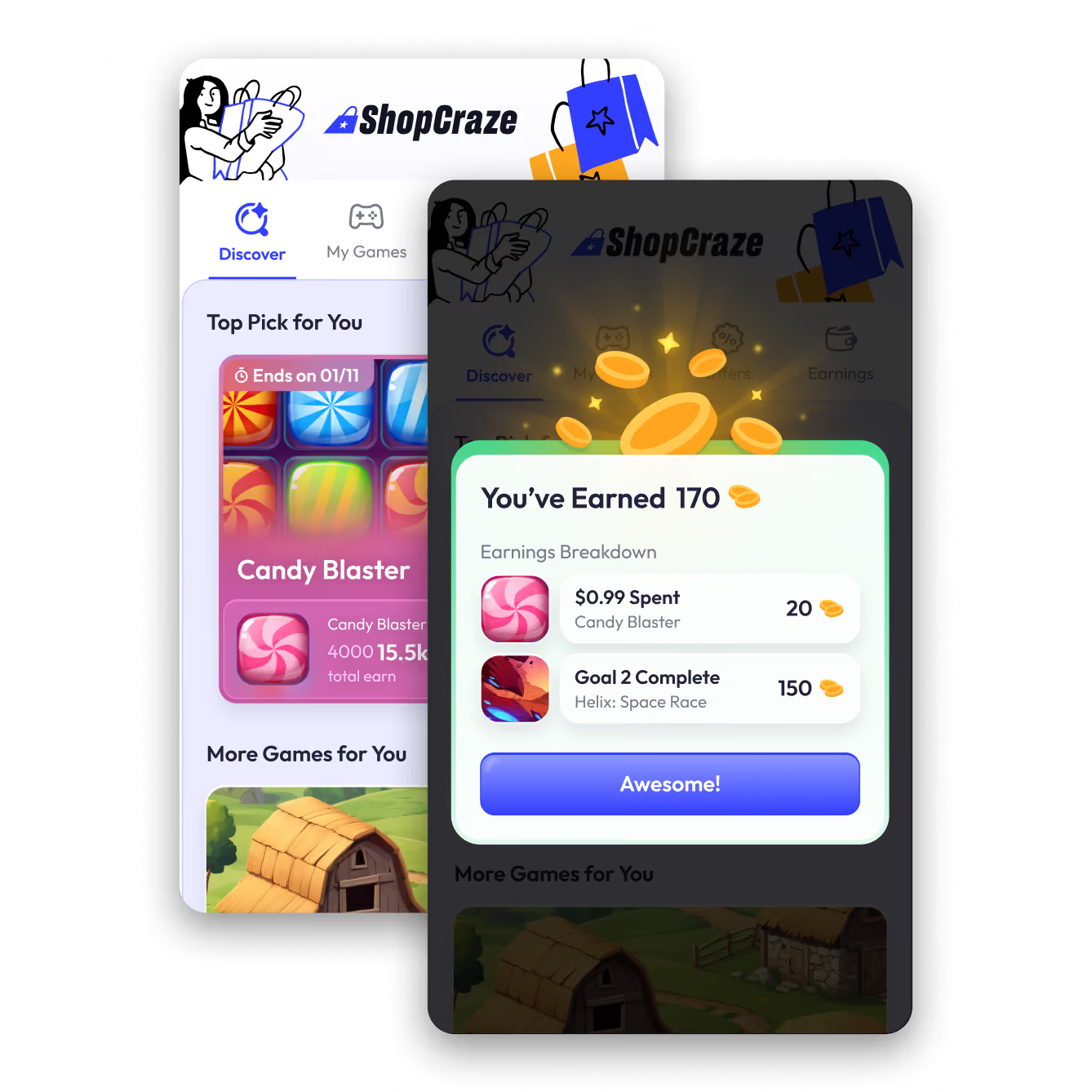
At Mistplay, we’re already helping businesses from all industries leverage the power of rewarded gaming, including brands in retail and shopping verticals.
For example, the Japanese social commerce platform KAUCHE implemented LoyaltyPlay, Mistplay’s rewarded gaming hub. KAUCHE’s customers can now browse the app to look for new mobile games to play, and this directly translated into higher revenue and app engagement.
With LoyaltyPlay, your customers gain access to a selection of popular mobile games, and you turn your loyalty program into a new monetization opportunity, while keeping your customers engaged between purchases and re-engaging lapsed ones.
Curious to see how rewarded gaming can fit your brand? Reach out to us to find out.
Sources