

EN
.avif)
game-advertisers
Want to launch mobile advertising in Japan but aren't sure where to start? You're not alone — many app marketers are eager to break into Japan's mobile market, but without local expertise, it's easy to get it wrong.
The short answer: Winning at mobile advertising in Japan means localizing your text, visuals, and app store presence, testing region-specific ad networks, and building campaigns around Japanese seasonal trends and player preferences.
You can’t approach the Japanese market the same way you approach Western or even other Asian markets. If you want to capture the attention of Japanese users, you must cater to their specific preferences and habits.
Before embarking on this adventure, it’s vital that you really get to know the Japanese app market. To get you started, we’ve compiled the most important information and numbers on this market, along with some useful tips.
👀 Related reading: Global growth, local play: Mobile gaming behavior & trends across the US, UK, Korea, and Japan
The best way to understand Japan's mobile app development market is to look at the numbers behind it, since they reveal user demographics, spending habits, and where the opportunity lies.
These are the main app market statistics for mobile advertising in Japan.
Even though Japan's average screen time runs lower than in other countries, it remains one of the most valuable markets for mobile game advertising because Japanese users spend heavily on in-app purchases.
In 2024, Japan's app market was worth $16.5 billion, with an average consumer spend of $166.60 — and most of that revenue came from mobile games (Business of Apps). Looking at Japan's 2025 revenue top charts, 6 of the top 10 grossing apps were mobile games, which shows just how central games are to any mobile gaming advertising strategy in this market.
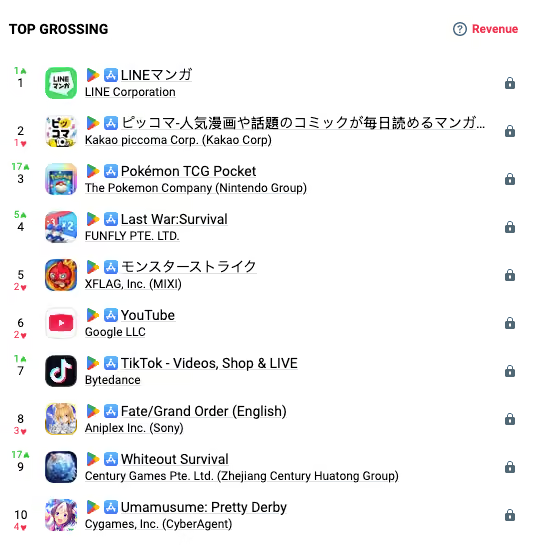
For a broader look at how player behavior compares across regions, and how to capture Japan’s outsized spending power, check out our Mobile Gaming Across Markets Report.
The best practices for mobile advertising in Japan come down to localizing every touchpoint – from text, to visuals, and app store presence – while working with people who understand Japanese culture and user behavior firsthand.
Here's what Mistplay's Head of Sales for LoyaltyPlay Japan, Tetsu Watanabe, says about approaching this market:

"Japan is one of the biggest markets, but it isn't easy to succeed in it. One of the important things to understand is that Japanese people are skeptical of new, non-Japanese things. Because of this, marketers need to improve their products based on feedback from Japanese users and adjust small details like translations, creatives, and ad copy. If your UI/UX isn't optimized for Japanese users, that can have a real impact. The key to success in this market is having locals who understand the culture and how to promote apps, either within your company or at your marketing partner."
Localizing your content is the first step to succeeding in mobile advertising in Japan. Most people in Japan don't read English fluently, with studies suggesting that only 20-30% speak some level of it. That's why it's worth translating your app and its marketing materials into Japanese, including in-app text, app store listings, and ad creatives.
However, localizing doesn’t just mean creating a one-to-one translation, and you actually need to be mindful of the cultural nuances in Japan. Japanese is a complex language with nuances those tools often miss. It also uses four writing systems – hiragana, katakana, kanji, and romaji (the Latin alphabet) – each used for a different purpose. Hiragana, for example, is used for native Japanese words, while katakana is used for words borrowed from other languages.
Getting this wrong can confuse users, or worse, so it's worth having native Japanese speakers review your text before it goes live.
Localizing language is only the first step, and you'll also want to localize your visual style for Japan. Unlike Western audiences, who tend to prefer clean, minimalist aesthetics, Japanese users tend to prefer a busier design style with colorful visuals and detailed information about perks, dates, and offers.
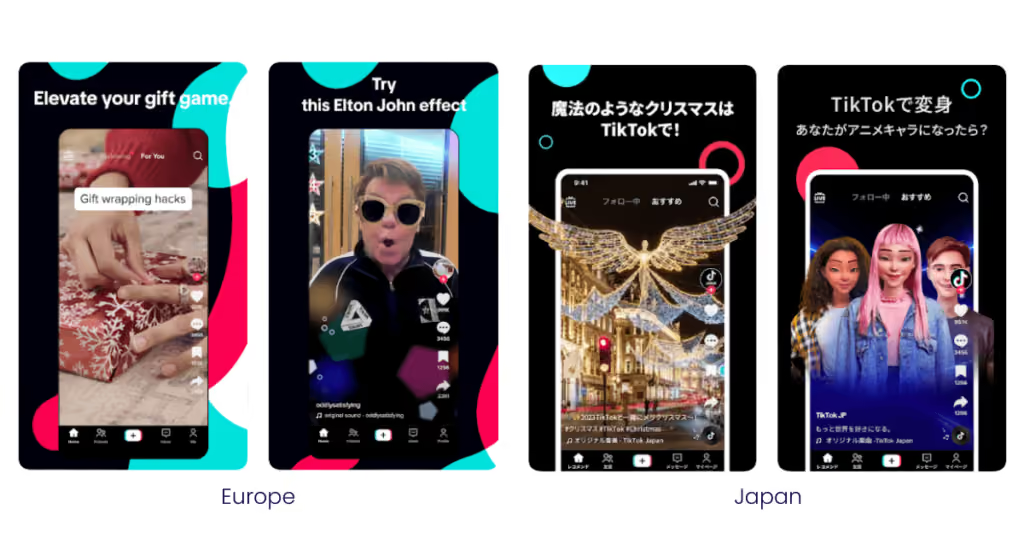
When designing for Japanese audiences, factor in "kawaii," Japan's culture of cuteness. Kawaii highlights cuteness through bright colors and childlike, playful elements – think certain manga and anime styles, or characters like Hello Kitty, Tamagotchi, and Pokémon.
Before you commit your ad budget, look at which platforms your target audience actually uses. According to our report, the most popular social platforms in Japan are:
With the exception of Line, Japanese users are on the same platforms as Western users – but they use them differently. Rather than defaulting to the networks that work well elsewhere, test a range of ad networks to find what performs best for mobile game advertising with your specific audience.
Just as American audiences respond to Thanksgiving and Halloween campaigns, Japanese users respond to their own seasonal moments. Leaning into seasonal marketing – with appropriate color schemes, messaging, and imagery – signals cultural awareness and can strengthen your mobile gaming advertising results.
To do this successfully, you’ll need to understand what the Japanese expect from each season. For example, spring is reserved for Sakura (cherry blossom) elements, summer for celebrations, and autumn for visuals like leaves and fireworks.
Just like in the rest of the world, ASO (app store optimization) plays an important role in mobile advertising in Japan.
In fact, Japanese users heavily rely on app store search bars to discover mobile apps. According to research from Aix, 90.7% of Google Play Store users and 76.3% of iOS App Store users use the app search function.
What can you do to grab their attention?
Unfortunately, just having your app store listing translated won’t be sufficient. Here are some other strategies you can use to optimize your app store pages for the Japanese market:

If you have a mobile gaming app, we have some extra tips for you.
Japanese mobile gamers have certain preferences that separate them from players in other countries.
For example, they have a positive attitude toward gacha monetization.
In games with gacha features, players make lucky draws to get random rewards. While this monetization system is considered controversial and even predatory in other markets, the Japanese enjoy it and think of it as a part of their culture.
Moreover, Japanese players have a strong preference for multiplayer experiences and social features. If you take a look at the top games in the Japanese market, you’ll notice most of them have competitive or co-op gameplay.
All in all, if you want your game to succeed in Japan, it’s important to learn about user preferences, encourage user feedback, and make adjustments accordingly. Doing so should also give a boost to your mobile ad campaigns, as you can expect better ROAS and retention rates.
Don’t get intimidated by the challenges of mobile advertising in Japan. Succeeding at mobile advertising in Japan comes down to localizing every touchpoint, choosing the right ad networks and seasonal moments, and building for the preferences of Japanese players. Here are a few quick answers to the questions marketers ask most:
Is Japan a good market for mobile advertising? Yes! Japan combines a large smartphone user base with high in-app spending, making it one of the most valuable – if competitive – markets for mobile game advertising.
Do I need to translate my app for the Japanese market? Definitely. Translating your app, ad creatives, and app store listing into Japanese, ideally reviewed by native speakers, is a baseline requirement for mobile advertising in Japan. Don’t just think translation, think localization.
What is gacha monetization? Gacha monetization lets players make randomized draws for in-game rewards. It's a widely accepted part of gaming (and even app!) culture in Japan, even though it draws more scrutiny in other markets.
Which ad networks work best for mobile advertising in Japan? There's no single network that works best across the board. Testing a range of ad networks against your specific audience is the most reliable way to find what performs for your app in Japan.
Mobile advertising in Japan comes with a learning curve, but you don't have to navigate it alone. Mistplay's dedicated Japan team can help you build a mobile game advertising strategy tailored to Japanese users.
Reach out to us today and let’s get started on planning your Japanese UA strategy.