

EN
How do offerwall rewards work?
Get a monthly loot box of insights straight to your email!
Subscribe
app-publishers
Offerwalls – sometimes written as offer walls or offer wall – are among the top-performing ad formats, driving strong engagement and a high effective cost per mille (eCPM). But not every offer is the same, and each format speaks to different player motivations and delivers different results for your game.
In this article, you'll get a side-by-side look at two popular rewarded ad formats: Multireward and Playtime rewards. Which one fits your game better?
👀 Related reading: Offerwalls explained: A proven monetization model for mobile apps
Offerwalls are a type of rewarded advertising that rewards users for their engagement with your game.
Think of an offerwall as a marketplace of tasks. Users open the offerwall section in your game, browse different tasks, and choose the one they like most. Instead of interrupting gameplay with videos or interstitials, offerwalls give users the chance to discover other apps and games and get rewarded for it. These rewards can be in-app currency or real-world rewards, depending on how you set up your offer walls.
Users coming from offerwall ads also tend to be higher quality than users from other ad formats. That's because they're more willing to invest their time, which drives higher retention rates and a stronger return on ad spend (ROAS).
Now, let’s deep dive and see how different offers can generate different results!
Multireward (also referred to as event rewards or milestone rewards) is the ad format that rewards users for completing a set of tasks or challenges.
Multireward is a variation of the single-reward ad format, where a user gets rewarded for one task, like downloading an app, trying a subscription, or opening an account. With Multireward, the focus shifts from a single task to completing multiple tasks or challenges.
For every completed task, the user will receive a reward, and its value often depends on how hard the task is to complete. For example:
This multi-reward engagement structure encourages users to stick with your app before they collect their full reward. If a user initially downloaded your game just to earn a reward, Multireward turns discovery into the goal. By the end, after the final reward, some users stay simply because they've started enjoying the game.

You can implement milestone rewards on both Android and iOS, and there's a wide range of in-app actions you can reward, including:
Each time a user completes an action, they get rewarded with an amount of in-app currency that fits the difficulty of the task. This works as a motivation lever, encouraging users to keep exploring your app.
The milestone rewards system works well because it allows users to receive a bigger reward if they complete all the steps, but they also get immediate compensation for their engagement.
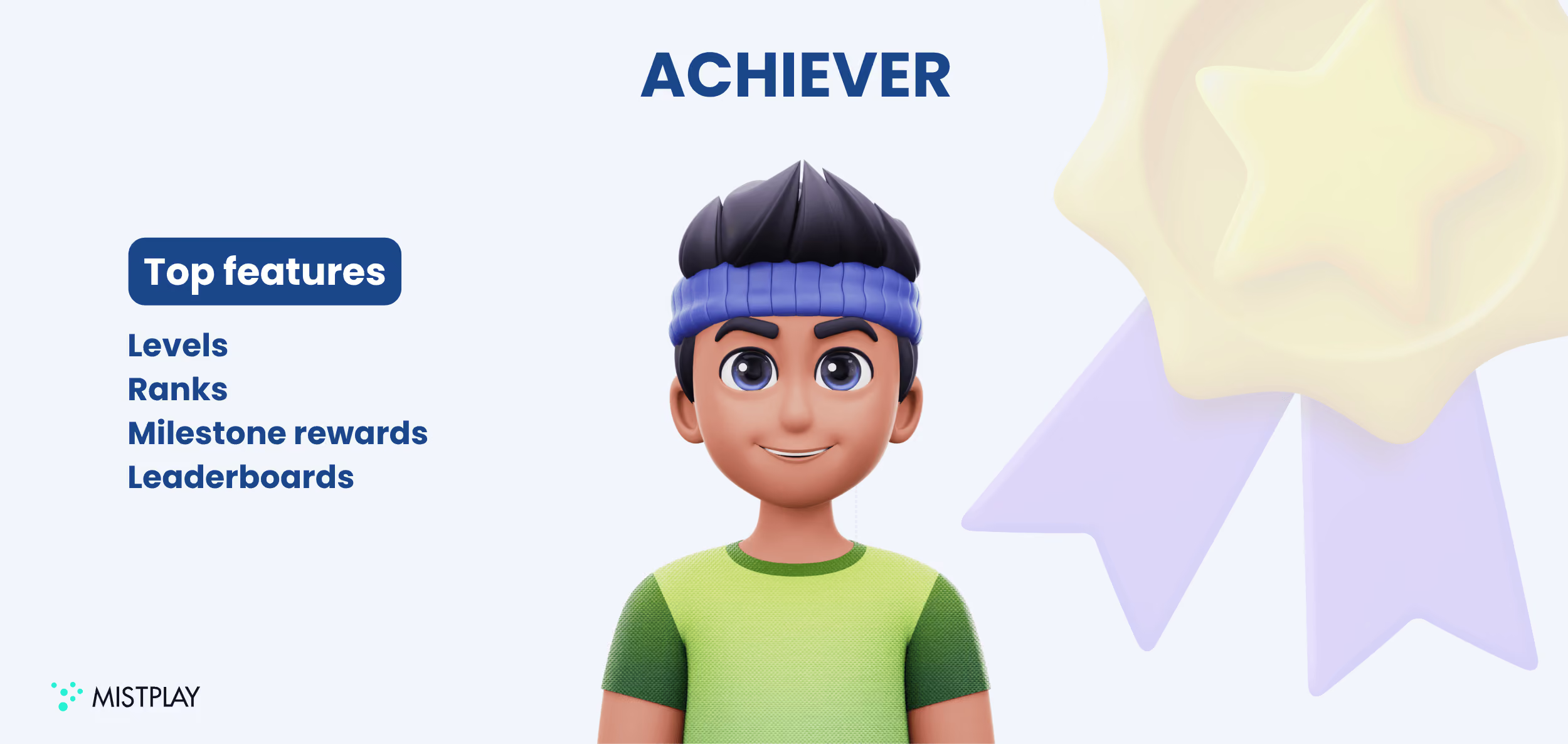
Looking at player personas – profiles that represent different types of players, which game developers and marketers use to understand their target audience and build tailored experiences – Multireward suits Achievers best.
Achievers are goal-oriented players, motivated by awards, badges and recognition. Multireward suits Achievers because it taps right into what drives them, progress and accomplishment. Each task feels like a mini goal to conquer, giving them a satisfying sense of “leveling up” every time they earn a reward. The more challenges they complete, the bigger the sense of achievement.
Since Achievers love tracking their progress and showing off their skills, the step-by-step structure keeps them motivated to go all the way.
Where Multireward rewards users for their achievements, Playtime rewards them for the time they spend on the game.
Playtime rewards are a time-based reward system that rewards users for time spent playing games rather than for single or multi-step actions. Usually, Playtime challenges last 30 days, but they can also go up to 60 or 90 days!
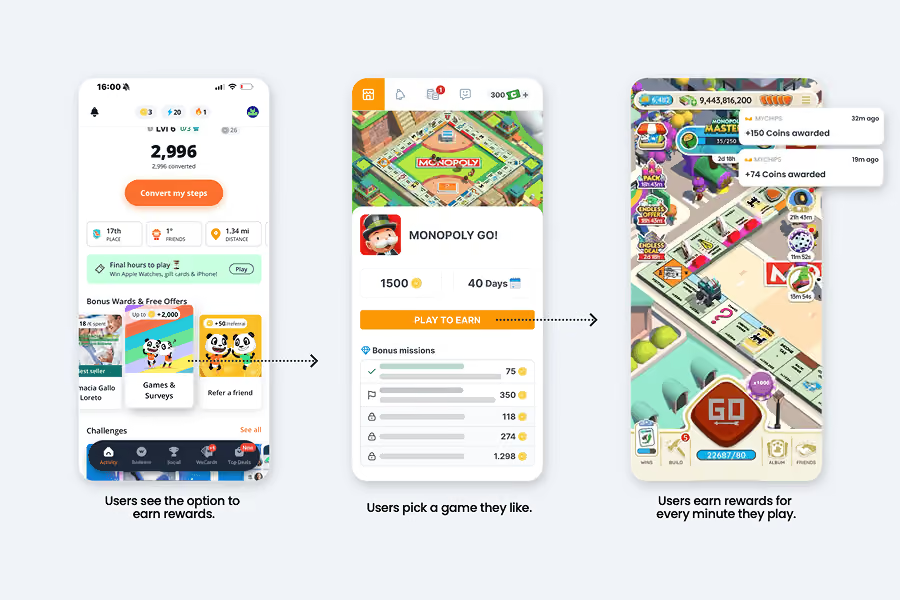
Once a user downloads a game from the offerwall, it starts tracking their playtime. For every minute they play, they receive small continuous rewards that keep them motivated to continue.
Players can keep earning rewards until either the offer reaches its maximum number of days, which is clearly communicated before they start, or the reward per minute.
By rewarding users for time spent playing rather than for single or multi-step actions, Playtime rewards let users explore the game at their own pace. This creates stronger engagement and often leads to users continuing to play even after the rewards end.
👀 Related reading: Meet Playtime Events: The next evolution of rewards with Mistplay
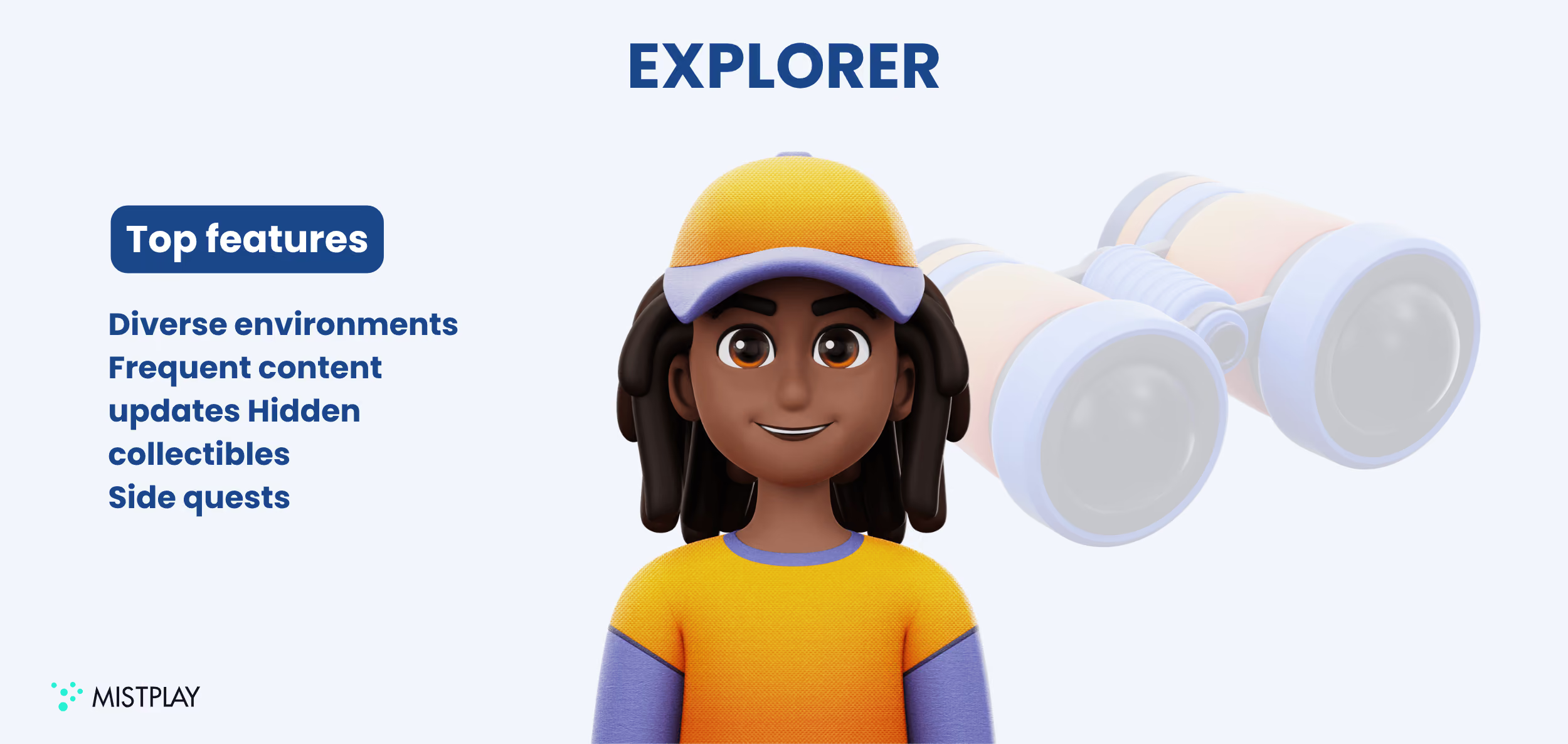
If Multireward is ideal for Achievers, Playtime rewards are perfect for Explorers.
Explorers are gamers motivated by curiosity and self-growth and enjoy longer gameplay. They are naturally curious and love diving deep into every corner of a game, looking for hidden treasures, new challenges, or surprises. Since Playtime rewards give them rewards just for playing, it perfectly matches their style of exploring at their own pace. The longer they play, the more they uncover, and the more they earn!
This constant sense of discovery keeps them engaged and makes the gameplay even more satisfying, turning every minute into a new adventure worth exploring.
The unique value of Playtime rewards is that, unlike other playtime-based offerwalls, it is the only one that is also available on iOS.
This means that you can go after both Android and Apple users (who are considered of higher value), generating greater revenue.
Choosing between Multireward and Playtime rewards comes down to which player personas your game attracts and what kind of engagement loop you want to build. A few common questions can help you decide:
Should I use Multireward or Playtime rewards for my game? It depends on your players. Multireward suits Achievers who are motivated by progress and milestones, while Playtime rewards suit Explorers who prefer open-ended, self-paced play.
Do I have to choose one offerwall ad format over the other? No, you could look for hybrid offerwall providers that allow you to setup rewards for both playtime and multireward. Alternatively, you could use multiple offerwalls to suit your needs.
Are offerwalls and offerwall ads effective for mobile game monetization? Yes. Offerwall ads like Multireward and Playtime rewards tend to attract higher-quality users than other formats, which drives stronger retention and ROAS.
Are you ready to take the next step? Get in touch with us to see how LoyaltyPlay can give a boost to your game and increase users’ satisfaction.