

EN

app-publishers
Are you considering adding offerwall monetization to your app’s revenue strategy? Offerwalls are not made to be the sole source of revenue, but they can work wonders if you include them in your existing strategy.
This ad format has proven its worth for different businesses, and more and more publishers are starting to recognize its potential. We’re bringing you 10 compelling reasons to explore offerwall monetization!
👀 Related reading: Offerwalls explained: A proven monetization model for mobile apps
Offerwall monetization is traditionally associated with mobile games, thanks to a strong track record of boosting revenue for mid-core RPGs and strategy games, as well as casual genres like puzzle, lifestyle, and arcade games.
But their potential extends well beyond gaming. Offerwall monetization is also a valuable option for non-gaming apps – think news, shopping, social media, and entertainment. These are the types of apps where you already see frequent engagement across different features, making offerwalls a seamless, rewarding addition to your user experience.
If you're weighing whether offerwalls fit your app, here's how to know if your app is a good match for an offerwall, and this breakdown of offerwalls in fintech apps goes deeper on the non-gaming use case.
Adding new ad formats to an existing setup can be tricky.
Since many ad formats interfere with the user experience, it’s important to carefully balance them out to prevent overwhelming users.
If you pick the right offerwall partner, then there’s no need to worry about this with your offerwall ads. As the format is flexible and customizable to not disrupt the user experience, there is no need to alter your existing ad placements. Offerwalls are thoughtfully positioned in dedicated areas, allowing users to explore them at their convenience.
There are two main types of offerwall placements: user-initiated and contextual. User-initiated placements are those that players explore at their convenience. Some examples include offerwalls in the game’s shop, home screen, and rewards section. Contextual placements refer to introducing offerwall ads in specific in-game moments. For example, after completing or failing a level.
👀 Related reading: How gaming offers drive revenue for high-value app verticals
While intrusive ads typically tend to shorten user sessions, offerwalls tend to extend them. The secret lies in their rewarding nature.
Offerwalls provide enticing rewards that encourage users to spend more time using the app or website. According to ironSource, offerwall users have a 1.6x higher session frequency than non-offerwall users.
The best example of this comes from the mobile gaming environment. When players run out of in-game currency, they aren’t forced to abandon the game or make a purchase to prolong their session. Offerwalls appear as an enticing alternative, allowing them to earn the needed currency and pick up where they left off.
Retention goes hand in hand with user engagement. Besides improving short-term engagement, offerwall monetization also helps keep players in the long run. Offerwalls are highly effective in boosting user retention from day 7 all the way to day 90.
According to ironSource, offerwall users have 5-7x higher retention rates than non-offerwall users on day 7, day 14, and day 30. On the other hand, Unity reports offerwall users have 5x higher retention rates, with the biggest difference observed in later stages, like day 60 and day 90.
If you’re using rewarded video ads in your game, you can expect an even stronger retention boost. According to recent research by Unity, combining rewarded video ads and offerwall ads increases player sessions and retention rates (Day 7, 14, 30) compared to using only one ad format.
👀 Related reading: 8 crucial user retention metrics to track for your mobile app
When users engage with offerwalls, they feel in charge. They get to explore different offers, handpick their favorites, and complete them on their own time.
On top of that, today’s offerwalls are carefully curated with targeted offers that match the users’ interests. In this way, users are in control and spared from irrelevant ads, allowing publishers to pick up ad revenue and maintain a positive user experience.
Users also have control over which offers from the offerwall they want to engage with. The important thing here is to select an offerwall partner with a diverse and high-quality ad inventory that provides relevant options for each user.
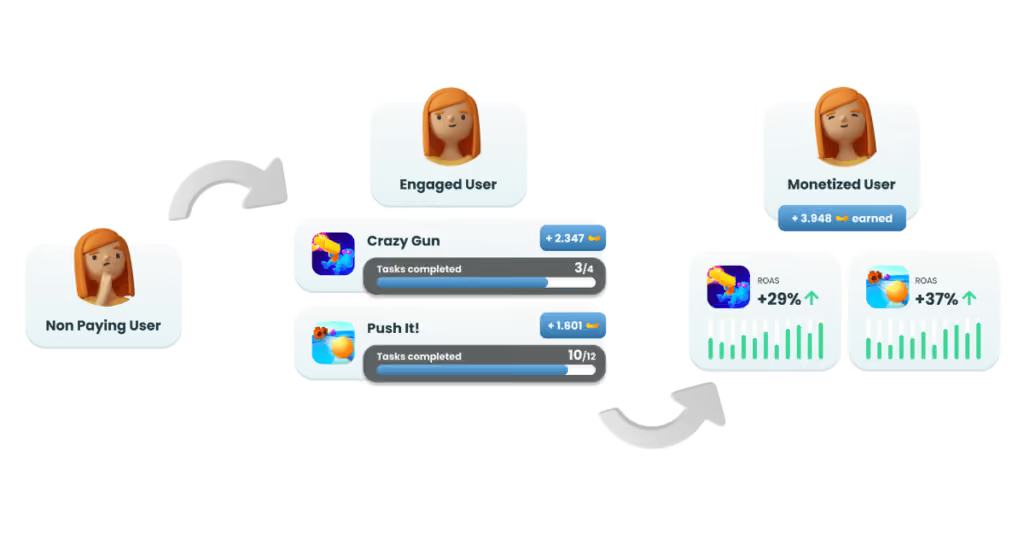
If many of your users are reluctant to make direct purchases, you can maximize their value by expanding your monetization strategy.
Adding offerwalls to an existing monetization setup allows publishers to monetize more users. This is because many users who aren’t open to spending money on apps are open to paying with their time instead.
This creates a win-win situation: users access premium content, developers boost their earnings and advertisers foot the bill.
Out of all the leading ad formats, offerwalls deliver the highest eCPMs (effective cost per mille). According to ironSource, the average offerwall eCPM for Android users in the United States is $530. In the same region, rewarded video ads typically yield a modest $17.2, while interstitial ads average $14.62 (Appodeal). This is because advertisers are willing to pay a higher price for quality users.
Fear that introducing offerwalls might eat into your IAP revenues?
This concern comes from the idea that giving out big rewards will discourage users from making purchases.
In reality, offerwalls have the exact opposite effect. According to Kongregate, offerwall users are 10-14x more likely to make in-app purchases than non-offerwall users.
The magic here is that offerwall rewards let users taste premium content they might not try otherwise. As they dive into offerwall rewards, many eventually decide to take the plunge and make IAPs, enjoying the full premium experience.

The trend of hybrid monetization is flourishing and shows no signs of slowing down. For this reason, today, it’s critical to understand how exactly offerwall monetization fits into this mix.
Unity researched how offerwalls perform in mobile games that use hybrid monetization. The results were impressive — offerwalls accounted for an average of 33% of the total ad revenue, with the biggest payouts coming from multi-reward offers.
What’s the secret to offerwalls’ success in this model? They work in harmony with existing revenue sources without overshadowing them, expanding the monetization strategy beyond direct selling.
It’s common knowledge that engaged, loyal users drive high LTVs.
As we already mentioned, offerwall users continuously interact with the “mother” app or website. This ongoing engagement makes them more likely to make IAPs, contribute to ad revenue, and foster a long-lasting commitment. Thanks to all this, offerwall monetization significantly contributes to higher user lifetime values.
Excited to try out offerwall monetization for your app or website?
Check out how the LoyaltyPlay rewarded gaming hub can help you elevate your business. LoyaltyPlay provides a non-intrusive experience that will boost your retention rates and maximize your LTVs, and it will help you reach thousands of new users ready to love your game or app. Reach out for more details!