

EN

app-publishers
Finance and fintech apps sit on two contrasting pillars. On one hand, they have a loyal customer base, which trusts their services and is willing to stick with them for a long time. On the other, these apps are transactional, meaning that users only actually open them when they need them: the average fintech user makes only 150 interactions a year, and the most popular activities are checking their balance (45%) and transferring money (31%).1
However, today, the landscape is changing. Besides acquiring new customers, finance and fintech apps are also aiming to more deeply engage the existing ones, increasing how often they return to the app between transactions. That’s where fintech gamification comes in.
In this article, we look at how gamification has entered the fintech and finance space, reshaping some of the features that seemed set in stone, and how it can help turn infrequent, transaction-driven fintech app visits into more of an engaging, daily routine. Plus, for a closer look at how the industry is evolving to leverage gamification, we asked Anthony Ortolan, Senior Business Development Manager for LoyaltyPlay, for his insights and tips.
💡Explore LoyaltyPlay for Finance & Fintech
The term gamification refers to the use of game-like features outside of gaming apps. Gaming apps have taken decades to fine-tune deeply engaging and enjoyable experiences, which other categories are now leveraging to improve their own apps. Think of streaks, leaderboards, points, and challenges – many of these elements originated in gaming to make the experience more fun and engaging for users, a quality that holds no matter what app you inject the mechanics into.
According to AmplifAI2, gamification can lead to increasing customer engagement by 48%, translating into more time spent in the app and increased customer loyalty. In fact, 43% of marketers see gamification as an essential feature to build brand loyalty.
The finance and fintech industry isn’t immune to this trend either. With competition getting harsher (the North America region alone is home to more than 12,500 financial technology companies3), financial institutions, even the most traditional ones, have started to adopt gamification in some form to delight customers in new ways and encourage engagement beyond transactions.
But how are modern finance and fintech apps adopting gamified mechanics? Here are a few fintech gamification examples already live today:
👀 Read also: Achieving a 17x traffic surge for Revolut with the Mistplay Audience Network
While finance and gaming may seem like two opposite worlds, there are underlying psychological reasons why gamification in fintech works:
Gamification can help fintech and banking apps build positive financial behaviors by rewarding specific actions – for example, frequent deposits. And rewards become a key element here, because it’s what reinforces repeated engagement.
To make the most out of rewards and increase loyalty and engagement, many banks and financial institutions have created their loyalty programs. However, today the majority of customers are not satisfied with what they get1.
In its 2025 Banking Consumer Study, Accenture interviewed 49,300 banking customers across 39 countries and asked them what factors would turn them from regular customers to advocates. The four most cited factors were the following:
Looking more closely at rewards, 60% of banking customers shared that they would like relationship-based rewards, but only 45% are satisfied with the rewards they get.
This gap is a valuable one, and leveraging something like rewarded gaming can really make a difference.
While gamification and rewarded gaming aren't the same thing, they draw on the same underlying principle: borrowing the engaging mechanics of games to drive better outcomes in a non-gaming app.
Where gamification adds game-like features (streaks, badges, progress bars), rewarded gaming lets your customers actually play mobile games within your app and earn real rewards for doing so – turning play itself into a new engagement and revenue channel.

Streaks and badges keep score, but rewarded gaming pays out. Members aren't just earning recognition for logging in; they're earning something with real value for playing. That's a much stronger reason to come back tomorrow – Anthony Ortolan, Senior Business Development Manager for LoyaltyPlay
Here’s why that matters for companies operating in the financial industry today:
💰 Fintech and neobanks are fighting on two fronts: engaging and retaining users, and finding new ways to monetize the app. In this context, a rewarded gaming layer can work both as a way to improve fintech app engagement rates, session frequency, and strengthen their monetization strategy. In fact, every time a user interacts with the offerwall, this translates into direct revenue for the app.
🏦 Banks and financial institutions, on the other hand, already have an established loyalty program in most cases. What they're missing is a way to make it stand out. Here, rewarded gaming works as a layer on top of the existing program, giving banks a way to diversify their rewards mix. And because these rewards are typically partner-funded, banks can reinvest that value directly into their members rather than absorbing the cost themselves. The goal here is engagement: getting members to interact with the app more, and take more in-app actions that move digital banking KPIs, like deposits or investments.
👀 Related reading: How mobile apps can capture untapped revenue potential
Whether you’re looking to monetize your fintech app or improve session frequency for your banking app, rewarded gaming can be layered directly onto your loyalty program, allowing you to narrow the gap between desired and actual rewards. Your app gets closer to what people want: a loyalty program that rewards them on a regular basis rather than occasionally. And this has several benefits for your app.
👀 Learn more about bank and credit card loyalty programs: Beyond points: Revamping bank and credit card loyalty programs in today’s market
Adding a rewarded gaming layer to your app means that your customers will want to open the app more frequently to earn and redeem rewards. This has a direct effect on engagement: an app that was once purely transactional, now becomes an app that users check regularly to play, earn, and redeem rewards.
For example, after integrating LoyaltyPlay – Mistplay’s rewarded gaming hub – Klink Finance saw a strong increase in fintech app engagement, followed by a steep increase in ARPDAU:
In a competitive environment where every finance and fintech company has its own loyalty program offering traditional rewards, standing out becomes essential. Rewarded gaming gives your program a differentiator, without many additional costs. Moreover, adding rewards that people need to earn has an interesting psychological effect: your users will value them more than the points they accumulate passively, resulting in higher redemption rates.
Lastly, integrating a third-party offerwall also introduces an additional revenue stream to your app ecosystem. Each time a user engages with a partner offer, this activity translates into ad revenue or affiliate payouts from the partners, bringing in a steady flow of additional revenue.
Gaming offers function as a new funding source for rewards programs within finance apps. Publishers can choose to pass back up to 100% of the revenue to users to boost the value of the ecosystem. Members then have greater balances to apply to shopping, cashback, or travel offers that perpetuate the rewards flywheel. – Anthony Ortolan, Senior Business Development Manager for LoyaltyPlay
👀 Learn more about this here: Why it’s time for fintech apps to embrace offerwalls
If your finance company is looking to add gamification or rewarded gaming to your owned channels and app ecosystem, there are a few best practices that can help you optimize for engagement.
Anthony Ortolan, Senior Business Development Manager for LoyaltyPlay, has over a decade of sales and ad tech experience across mobile gaming, e-commerce, and loyalty, and here are some of his best practices:
Gamification and rewarded gaming have real power in fintech, but not every gamified product engagement tool for fintech apps is built the same way.
LoyaltyPlay, Mistplay’s gaming reward hub, layers onto your existing ecosystem and allows your users to earn rewards by playing a curated selection of mobile games. Here's what makes LoyaltyPlay specifically suited to power improve engagement for finance and fintech apps:
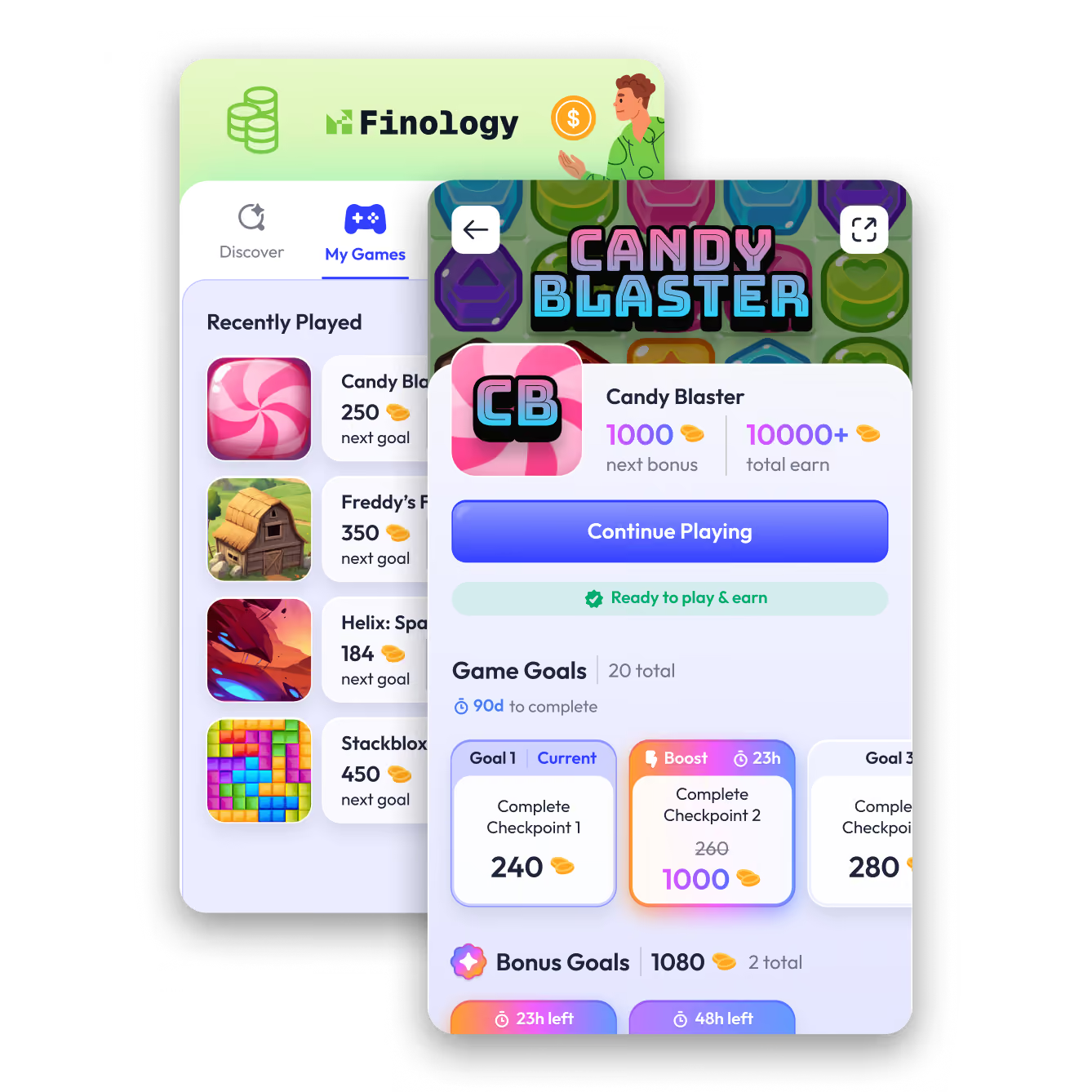
Want to see how LoyaltyPlay's rewarded gaming hub can turn your finance app frequency from a monthly transactional visit into a daily habit? Reach out to us today to get started.
Sources: