

EN
Like every other industry in the tech realm, AI is transforming game development too. In a recent Google Cloud survey, which included over 615 game developers from different countries, 90% of them admitted to using AI in their work.
The question is, how are they using it? And what impact will AI have on the future of game development?
In this article, we’re bringing you a list of eight tried-and-true ways to use AI in game development.
👀 Related reading: How artificial intelligence is revolutionizing mobile gaming
Since the release of ChatGPT in 2022, AI has become widely used across many different fields, and game development is one of them. According to Google, game developers use AI for a variety of tasks, including:
Overall, the striking majority of developers who use AI do so for one main reason: to reduce repetitive tasks (95%).
However, things change when we take a look at the creative side of game development. Only 36% of developers say that they use AI for design, animation and dialogue writing.
In another survey conducted by Gamedev.js, the number was even lower:
Coming up with unique mobile game ideas can be a daunting task.
Because of this, many developers turn to AI during the ideation phase as a brainstorm and workshopping partner to build (and refine) their ideas.
It usually starts with a simple prompt like “Give me 20 mobile game ideas inspired by currently popular games”. While this will probably not give you the ideal answer, it can be a good starting point for further idea development.
Once you come up with a rough idea, you can use AI to help you enhance it and come up with a list of related ideas, pros and cons of each idea, or even lists of existing games that you may end up competing with.
A popular use of AI in game development is for analyzing the top charts and identifying the most popular mechanics. If you have a theme in mind, you can ask AI to narrow down the potential mechanic choices, only suggesting those that worked for similar games in the past.
If you already know which mechanic you want to use, AI can also help you get the most out of it, for example, by suggesting the best-fitting monetization methods, engagement, and retention features.
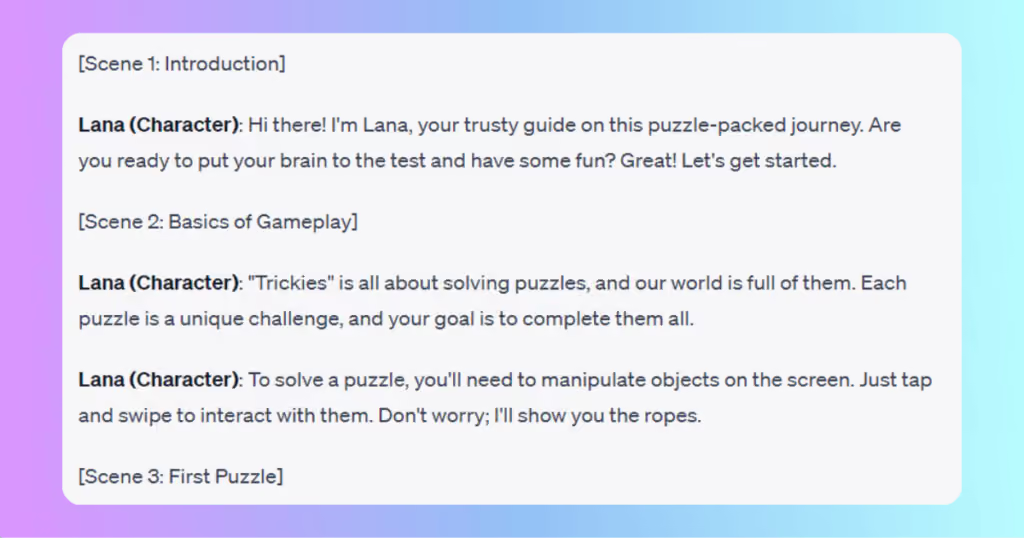
Narrative meta layers have been a mobile gaming trend for years.
And with the rise of AI in game development, they’ve become even more popular.
AI has become an absolute game-changer in the realm of narrative storytelling. What previously took a team of game writers and a large amount of time, can now be delivered in a matter of seconds.
Using AI language models, you can easily craft engaging narratives that captivate players and keep them coming back to the game. This includes:
On a more advanced level, AI can even create narratives that dynamically adapt to player behavior. For example, after players make a few conversational choices, dynamic AI models can generate unique responses. This should create a sense of realism, delivering a unique and memorable experience for each player.
AI can be of great help in designing all kinds of in-game assets, including characters. Simply provide a detailed description of your vision or upload a reference image, and let the AI work its magic.
The most important thing here is to master the art of prompting. When writing the prompt, it’s important to be as precise as possible, highlighting the desired elements, pose, and image style (e.g. anime, cartoonish, realistic).
However, no matter how good it gets, AI art usually requires some human touch. In the post-production phase, game artists usually recreate the AI-generated image, fixing its flaws, adjusting the style, and including some additional elements.
Most game developers know all about the importance of app store optimization (ASO). But, only some have dedicated ASO teams and access to pricey tools.
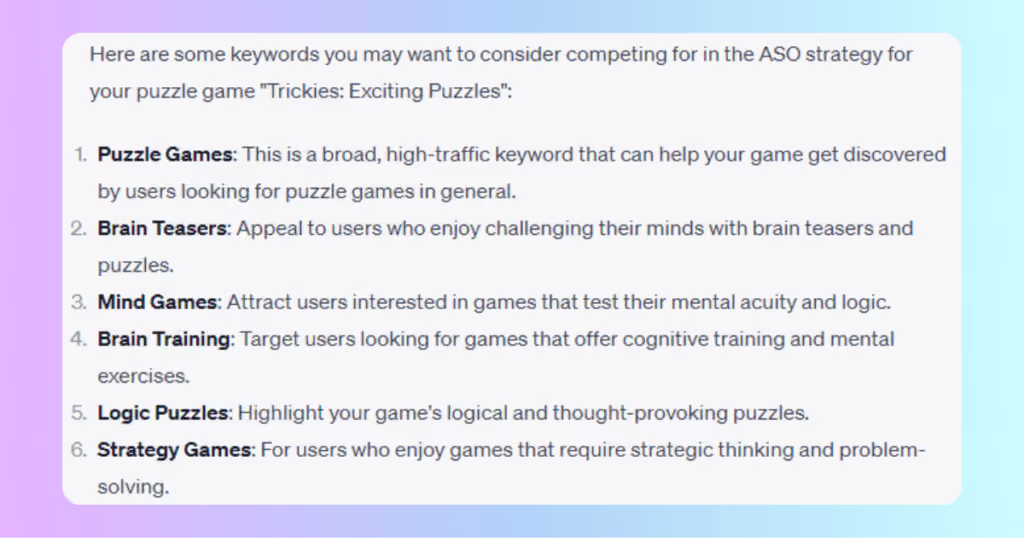
Luckily, AI can help in many aspects of app store optimization, including:
Traditionally, testing a game means acting as a player to download, signup, and dive into the full gameplay experience to test it first-hand.
With the help of AI algorithms, developers can make game testing faster and more precise. AI testing systems can act like players, trying many different things in the game to find problems much quicker than humans. Machine learning can also identify patterns and anomalies from gameplay data, leading to better game performance.
Note that this doesn’t eliminate the need for a manual check. You should still have someone play and test your games, but AI in game development can be of great help in the process.
To avoid creating game levels that are too difficult, AI tools can help developers suggest level designs based on best practices. This means they should deliver scenarios for levels that smoothly ramp up in difficulty, ensuring players enjoy a satisfying and engaging gaming experience.
More sophisticated tools can even pace levels in real-time.
Based on dynamic difficulty adjustment, these tools analyze player interactions and performance and deliver a tailored gaming experience for each player.
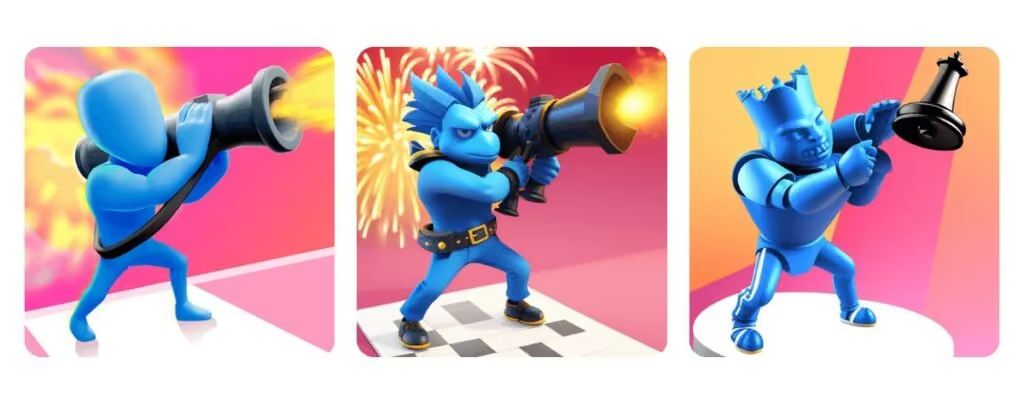
We’ve already mentioned that AI can be helpful in icon design.
But, since this practice is widely used, it deserves a separate mention.
Game icons help games stand out from the competition and make a great first impression on potential players. For this reason, developers often update and test different icons in an attempt to boost conversion rates.
AI can help by giving new ideas for your icon to show what’s cool about your game. If you already have a well-performing icon, you might want to stick to a similar concept. To do so, you can upload the original icon as a reference and ask AI to make small tweaks. For example, changing the character’s pose or background color.
But, keep in mind that AI-generated icons also require some designer magic before they reach the end user.
After going through this article, you might be wondering what the best AI tools commonly used for game development are. So we’ve asked game developers to share their favorites. Here’s a list of the top mentioned.
While game developers don’t recommend you let AI do all the coding – without the necessary experience, you don’t know where to intervene when the AI makes mistakes – this is one of the tasks that is more often automated.
The most common tools are:
For design, some tools can help you with design concepts, illustrations or videos. However, many developers complain that it’s often difficult to generate and scale a design that is completely coherent using only AI.
A few tools worth mentioning here are:
Lastly, music and voices can also be produced using AI:
Besides these tools, there’s another thing that is on the rise. It’s AI agents, which, according to Google, are being used by 87% of developers.
While some of the tools we mentioned earlier can be considered AI agents (like, for example, GitHub Copilot), some agents act directly on the game, creating more dynamic gaming environments.
Take NPCs for example. Non-player characters have always existed in video games, but, with AI, they’re becoming more complex and cooperative. Moreover, these agents allow developers to vary the difficulty of the game, matching the player’s ability.
Looking at the state of the industry today, AI in game development is here to stay and it will only become more pervasive. However, it’s difficult to say that it will entirely replace game developers. Human creativity will always have an advantage over AI tools, and AI alone can hardly replicate it. On the other hand, fewer people may be necessary to complete the same tasks.
What’s your view on this topic? Let us know on LinkedIn, and subscribe to our newsletter for more articles like this!