

EN
The latest data on mid-core games UA strategy
User acquisition strategies for Mid-core games
Creative optimization and testing
Get a monthly loot box of insights straight to your email!
Subscribe
Mid-core games cost more than double to advertise compared to casual games, and yet, studios can’t stop making them. Why? Because mid-core gamers tend to foster longer retention, higher LTV, and deep player loyalty.
If you’re running UA for a mid-core game in 2025, you’re already fighting an uphill battle. So, how do you optimize user acquisition when CPIs keep rising?
In this guide, we’ll break down the latest 2025 data on CPI, ROAS, and LTV for Mid-core games, and show you the UA strategies top titles are using to outsmart rising costs.
👀 Related reading: Mobile gaming loyalty in 2025: Genres driving monetization, engagement, and LTV
Midcore games are a type of mobile game that strike a balance between more casual and hardcore gaming styles and mechanics. If casual games are short and easy, and hardcore games are highly complex, mid-core games fall in between. – with mid-core games being more engaging and strategic than a casual game, but still more accessible than a hardcore game.
Mid-core games usually require a moderate time investment (average sessions may vary from 10 to 30 minutes) and deeper mechanics than casual games, such as strategic thinking, resource management, PvP battles, and so on.
Common genres of mid-core games include:
Before diving into the best practices for mid-core games UA strategy, let’s take a look at some useful data.
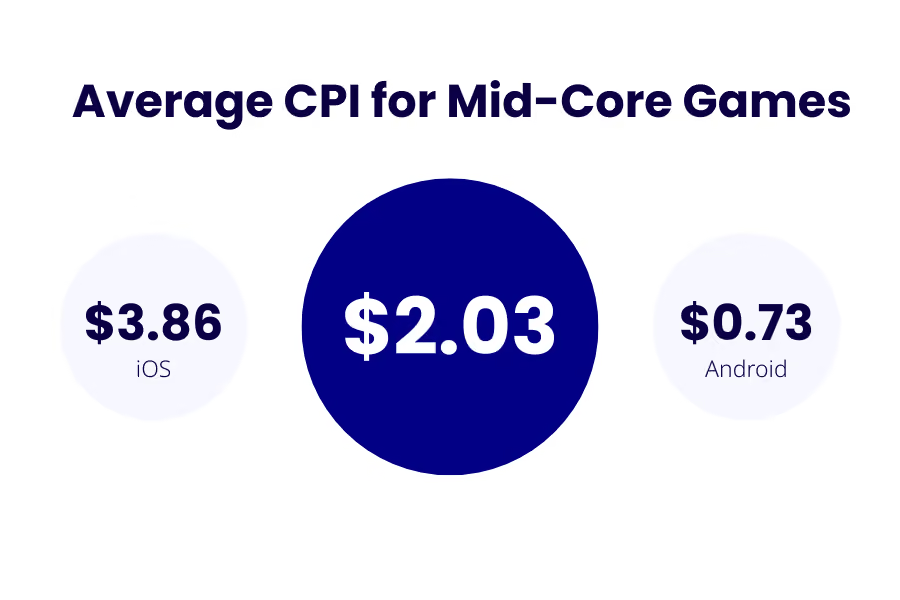
According to Liftoff’s report on mid-core games, the average CPI for mid-core games is $2.03, which is more than double the CPI of casual games ($0.98).
This is because mid-core games require a higher time investment, and not everyone is a suitable player.
More specifically, CPI for mid-core games is significantly higher on iOS than Android:
This gap is no surprise, with iOS CPIs being almost always higher than Android CPIs across all app categories. This is likely due to a few reasons, such as:
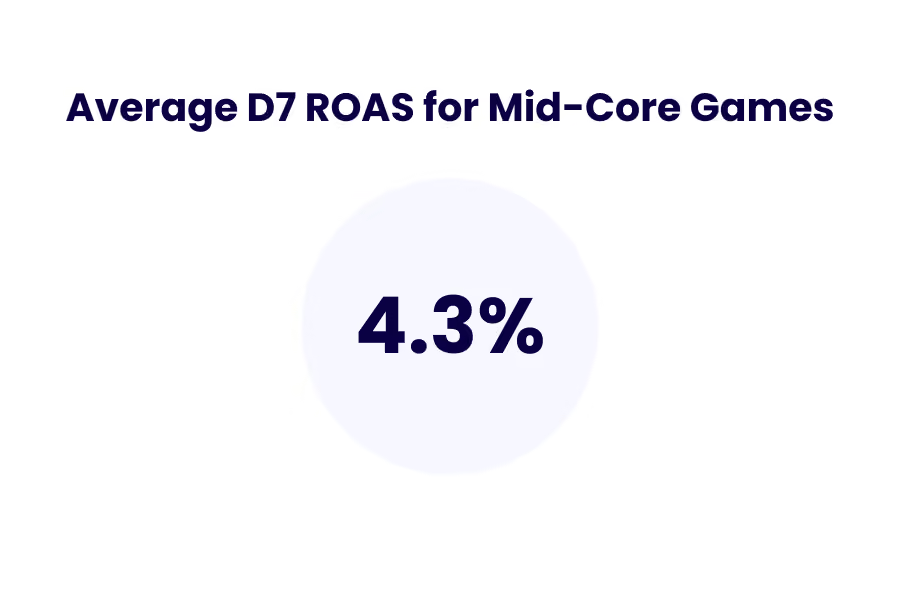
Looking at D7 ROAS, casual games seem to perform better than mid-core games.
This makes sense when you consider how these games make money. Casual games usually rely on ads and quick in-app purchases. Their players tend to engage in short, frequent sessions, making it easier to serve ads and drive early monetization.
On the other hand, mid-core games focus more on long-term engagement and in-app purchases over time, so it takes longer to see a return. Players spend more time in the game over a longer period, and monetization is often tied to in-app purchases rather than ads.
Because of this, D7 ROAS doesn’t tell the whole story for mid-core games. Metrics like LTV are just as important to understand how profitable these games are in the long run.
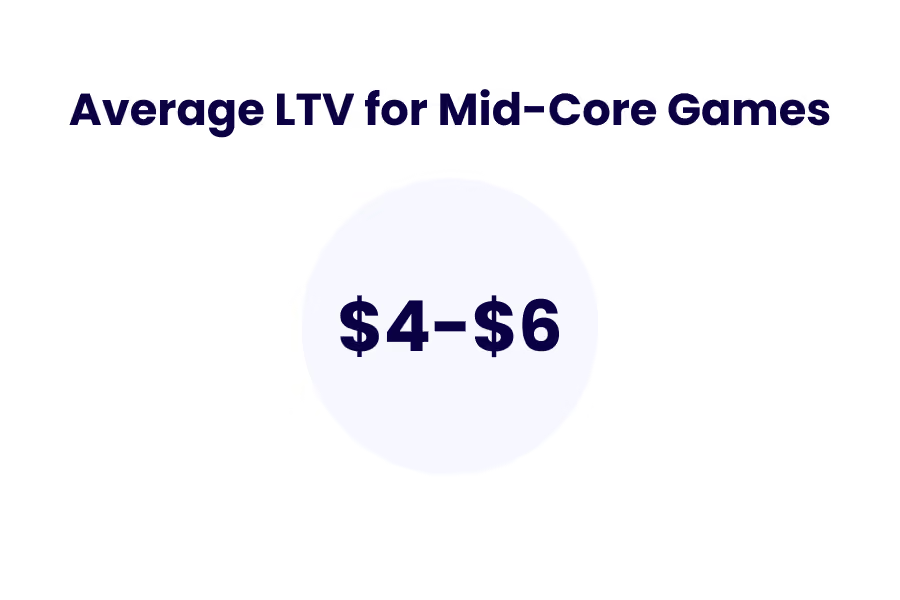
If we look at LTV, mid-core games show rates that are 2 to 3 times higher than casual.
In short, mid-core games aim at returning on their investment in the long run, rather than in shorter periods.
To identify the best UA strategies for mid-core games, the first thing we need to understand is: who are the ideal players of mid-core games? While casual games appeal to occasional gamers, mid-core games have a different target audience.
Mid-core gamers are mostly adults in their late 20s to mid-40s, often former hardcore players who no longer have as much free time.
They still want games that are deep, strategic, and tell a good story, but they also need something that fits into their busy lives. What they’re after is balance: games that are challenging and engaging, but not overwhelming or too time-consuming.
When developing your UA strategy, you should take this into consideration.
You can put it as you want, but paid user acquisition is often essential to scale a mobile game’s audience. The mobile gaming environment is highly competitive, and organic user acquisition will most likely not be enough. Mid-core games need to cast a wide, targeted net to reach qualified players who will invest time and money in the game.
A common trend we see in the top mid-core games is diversifying the paid advertising channels. Top games mainly use channels like Meta, Google, YouTube, TikTok, and in-game ad networks to maximize reach.
TikTok, especially, has emerged as a crucial UA channel for mid-core games targeting younger demographics, with a good example of this being EA Sports’ FC Mobile. For its launch in the MENA region, EA ran a TikTok Branded Mission campaign encouraging users to create videos with a special in-app filter (mimicking the game’s player cards). This campaign generated 88.5 million video views and thousands of UGC videos, greatly amplifying reach.
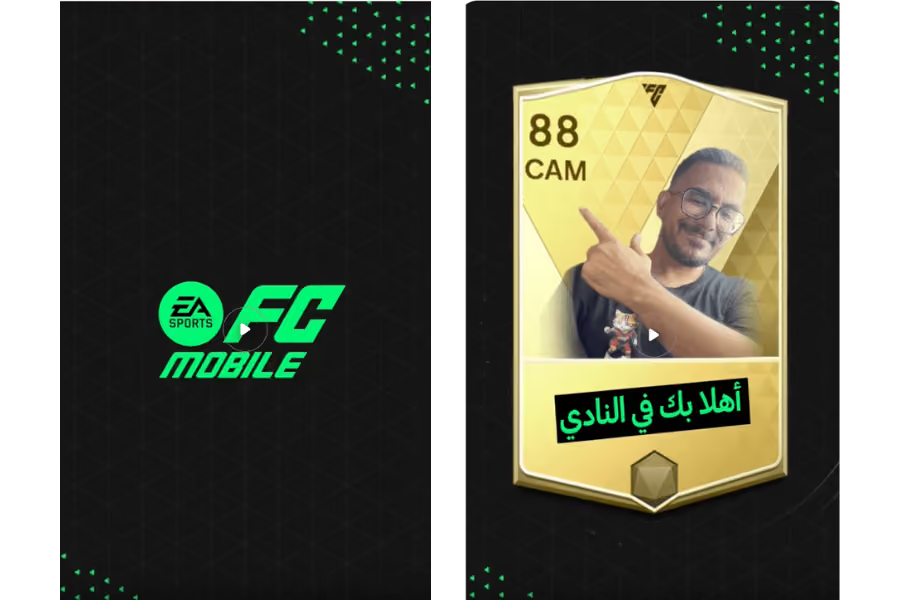
When it comes to mobile game user acquisition strategies, creativity and optimizing your ad creative always gets the top spot. This is especially true with mid-core games. When CPI costs are higher, your creatives need to be optimized to get the most out of every click or view.
Top games are constantly testing new ad creatives, sometimes as many as thousands each quarter. So, what are the top-performing creative strategies of mid-core games right now?
According to AppsFlyer’s latest report, The State of Creative Optimization, this is what mid-core games are doing:
When it comes to hooks, immediate gameplay is the most used one. However, on social and search, advertisers are experimenting with different types of hooks, like gameplay reviews, testimonials and reaction videos, which show promising results on retention.
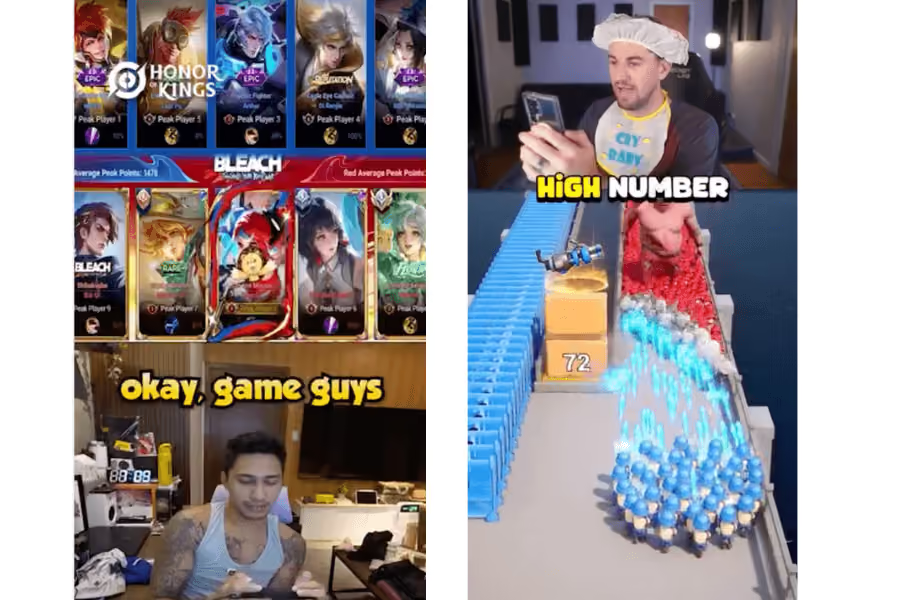
This is a new trend that prioritizes community and high-quality players over quantity.
Partnerships and influencer marketing are a cornerstone of UA for mobile games. Partnering with popular streamers, YouTubers, and even mainstream celebrities helps tap into built-in audiences and lends social credibility – and it’s the same for mid-core games UA.
For example, for its launch in Russia, Italy, France and the UK, Genshin Impact partnered with popular gaming influencers to promote the game by relying on well-known and trustworthy influencers in those markets.

Some of the top games even included mainstream celebrities in their campaigns.
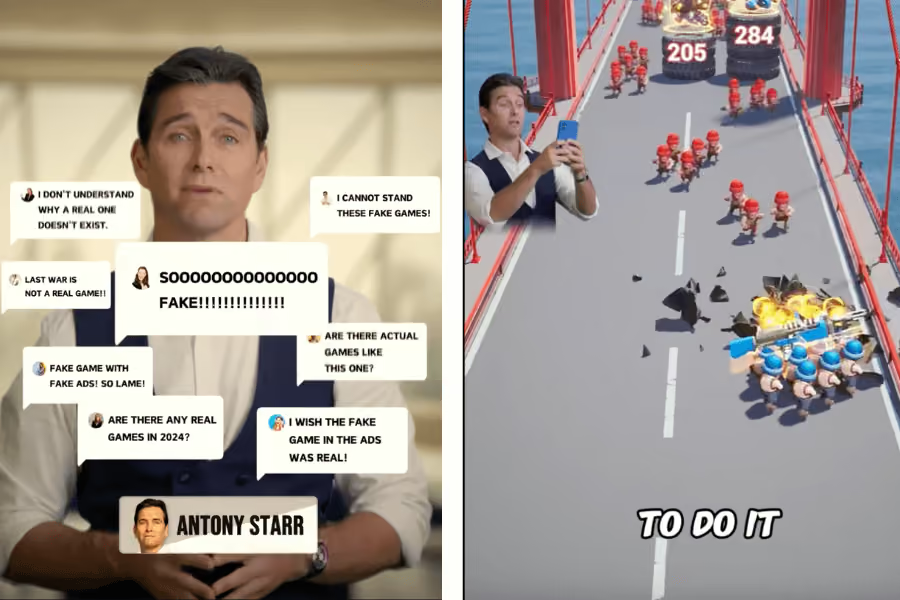
Last War: Survival partnered with actor Antony Starr (famous as Homelander in The Boys) for a TikTok ad campaign, which leveraged the fact that the game looks just like the fake ads that circulate on the internet.
Why does this work?
It relies on a principle called social proof. Basically, we’re more likely to try something if the recommendation comes from someone similar to us or someone we trust. And celebrities and influencers are often perceived as trustworthy or reliable.
In mid-core games, where monetization relies on longer retention cycles, audience quality matters as much as quantity (sometimes even more).
That’s why using lookalike audiences and retargeting is essential for improving ROAS and LTV.
Lookalike audiences, especially on platforms like Meta and Google, allow UA managers to target their user acquisition efforts towards users who resemble their highest-value players.
Retargeting is as important, especially in a genre where players often explore games before committing. Effective mid-core retargeting strategies include:
Once a game is live, periodic events and updates serve as mini UA campaigns. Every major patch or season is an opportunity to run ads and re-engage users via push notifications and email.
Pokémon GO’s big annual Pokémon GO Fest and holiday events are heavily marketed beforehand, often in mainstream media and app store features, bringing in new and returning players each year.

At the same time, including rewarded mechanics can also improve mobile game user acquisition.
For example, an offerwall in-game lets players earn premium currency by installing and reaching a certain point in other games.
This is effectively a cross-promotion network: Game A’s players install Game B to get rewards in Game A, meaning Game B acquires a user at the cost of some currency.
Many mid-core games use this to attract budget-conscious players who might not spend cash but will spend time installing and playing another game. For UA managers, offerwalls can provide lower-cost acquisitions because the user’s incentive is covered by virtual goods.
User acquisition for mid-core games isn’t easy, and it’s not cheap. But the long-term value makes it worth the challenge.
Here’s what to keep in mind:
At the end of the day, mid-core UA is about finding quality, not just volume. It’s slower than casual, but deeper. And if you get it right, the payoff is real.
Looking to scale your mid-core game? Mistplay has been helping leading mobile game publishers reach new, high-value players across the world for over ten years. Check out our core loyalty rewards platform and contact us today to get your game live to millions of new users.
