

EN
.avif)
Back in the day, game communities were almost exclusively limited to PC and console games. But, in the last few years, we’re witnessing a rise in social mobile game communities as people connect more online to find like-minded friends.
There are numerous benefits to having strong player communities, so many mobile game publishers are intentional with how they try to build, foster, and grow their game communities. Let’s go over everything you need to know about mobile game communities, their effects, and how to build them.
👀 Related reading: From acquisition to retention: How mobile game communities fuel growth today
Mobile game communities consist of players who come together because they share an interest in a particular game. In these communities, players can:
All of this, whether positive or negative, is a part of natural player interaction that keeps communities alive and kicking.
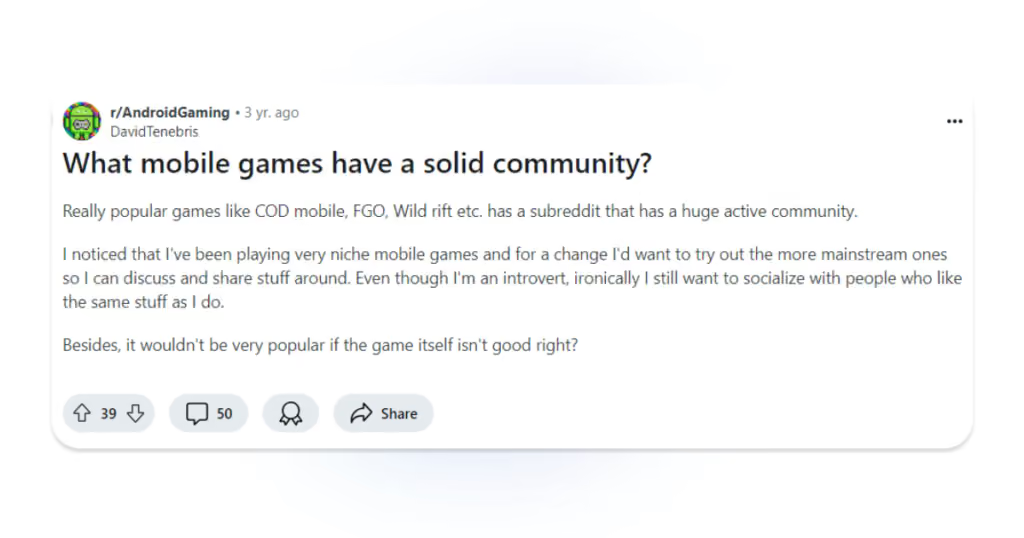
We’re seeing more and more social mobile game communities because mobile games have evolved significantly over the years. Today, many genres are more immersive and drive higher engagement – especially RPG, strategy, and shooter games. Such games often have active communities.
Players can form these communities through in-game and out-of-game platforms. In multiplayer games like RPGs, developers often create spaces within games for players to interact with each other. For example, guilds, clans, in-game chat, etc.
Outside of games, communities exist on social media channels like Facebook, online forums like Reddit, Discord servers, live streaming platforms like Twitch and YouTube, and more.
If you’re wondering why you should bother building a game community when you already have so much on your plate, let’s give you just a few reasons.
Mobile game communities are often an overlooked factor in driving new users to games. Having a strong community around the game can significantly boost word-of-mouth referrals, which is a valuable source of organic traffic.
The thing is, players put a lot of trust in the opinions of others.
According to our research on mobile game communities, almost half of mobile gamers (49%) research reviews and ratings in the app stores or on the web. What’s even more important, 19% of players research a game’s online community before deciding to install it.
Having an active gamer community not only helps attract new players, but also engages and retains them. When players are a part of a community, this makes them more invested in the game and gives them extra reasons to continue playing it.
Think about it: when you’re playing a game and don’t talk to anyone about it, chances are – you’re going to get bored faster. But if you’re talking to someone about it regularly, you feel a certain level of commitment to play the game as long as they do. Especially in multiplayer games, when you play together and aim to achieve certain goals as a team.
More deeply engaged players mean more spenders. In our report, we found that 1 in 5 (21%) spenders research a game’s community before installing a game. Moreover, 1 in 4 (27%) spenders say they actively participate in social mobile game communities, compared to 18% of non-spenders.
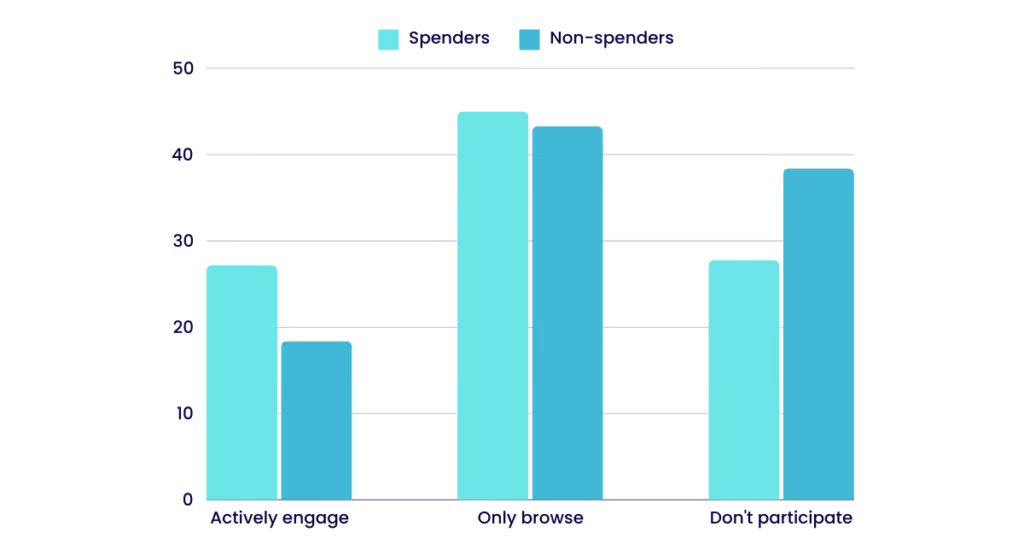
Therefore, if you want to encourage potential spenders to invest in your game, consider building a community around the game. With one in four spenders being interested in game communities, having one can make a huge difference in your IAP revenue.
Want to get unfiltered feedback about your game? You’ll most definitely get it in the game’s community.
Players in these communities tend to share their thoughts and frustrations about different aspects of the game. This includes technical issues, improvement suggestions, opinions on game updates, etc. Remember, these are usually loyal players who actually care about your game.
If they didn’t, they wouldn’t bother joining the community and writing about it.
Therefore, it’s important to take this feedback seriously and see what you can do to improve the player experience. By doing this, you have better chances of engaging and retaining these active and loyal players.
Players rarely spontaneously form game communities, so this is typically done by the publisher. Based on their community vision, you can setup dedicated spaces where players can connect and interact. For example, by creating a subreddit on Reddit, a Facebook page or group, or in-game chat and friend functionality. Each of these platforms should be easily accessible, have a defined purpose, and be appealing for players to join.
Let’s say you have a completely new game you want to build a community around. You can kick off its community by sharing gameplay teasers, characters, unique features, and even early access to new features. This way, you can build anticipation and spark the interest of potential players.
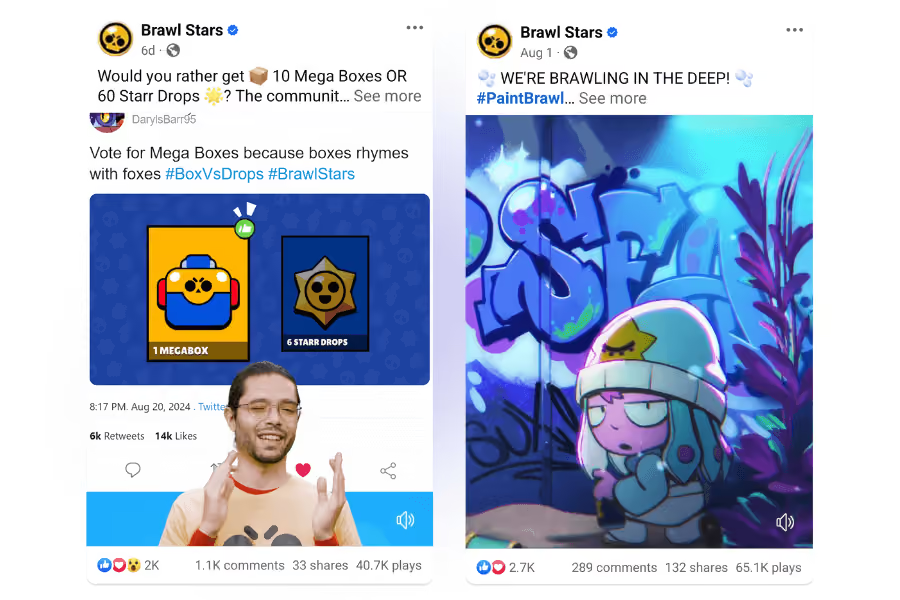
Creating a community is only half the struggle. The next step is to continuously engage with players, actively participate in discussions, and show your presence. Here’s how you can achieve this:
If you want to keep your mobile game communities strong, regularly monitor how players interact and engage. Keep an eye on engagement highs and lows. What content resonates, and what content flops? Drops in user activity could indicate that players are becoming disengaged, while extra activity may be positive or negative. Either way, make sure to pay attention to what your users like, what they don’t, and what kind of feedback they provide.
Use all this information to make improvements, whether it’s updating game features, adding new content, or improving communication. This is an ongoing process that will help you build an active, loyal, and positive community.
Building and maintaining a community is not an easy task: it requires a lot of thought, effort, and persistence. But, done properly, it’s worth it, as it can kick off a flywheel of organic growth as users install a game, engage with the community, and refer it to their friends.
Whether you’re hoping for a more engaged player base, better retention rates, boosting player loyalty, or getting useful feedback, mobile game communities are the way to go.
Looking for other ways to boost your game’s loyalty, monetization, and engagement? Check out Mistplay’s decade-proven rewarded model with Mistplay for Android and iPhone.
