

EN

Mobile game cross-promotion has been around since the early days of mobile gaming. And not only is it still alive, but it is now more popular than ever before.
Ever since Apple introduced privacy restrictions, game marketers have been exploring different strategies to keep track of their players while growing the reach of their apps. In light of this, cross-promotion has re-emerged as a valuable solution to scale apps by leaning into the depth of your (or a game partner’s) existing user base.
In this article, we’ll dive into what mobile game cross-promotion is and how it works to help you determine if it makes sense for your business. Let’s start with the basics.
👀 Related reading: Mobile user acquisition: The modern developer's guide
Mobile game cross-promotion is a strategy where developers leverage the user base of another game to promote their titles. This strategy appears in two different forms:
While both of these strategies have their advantages, the first one is far more popular, as there’s less legal and partnership hoops to jump through. For this reason, we’ll focus on exploring the ins and outs of mobile game cross-promotion within your own portfolio.
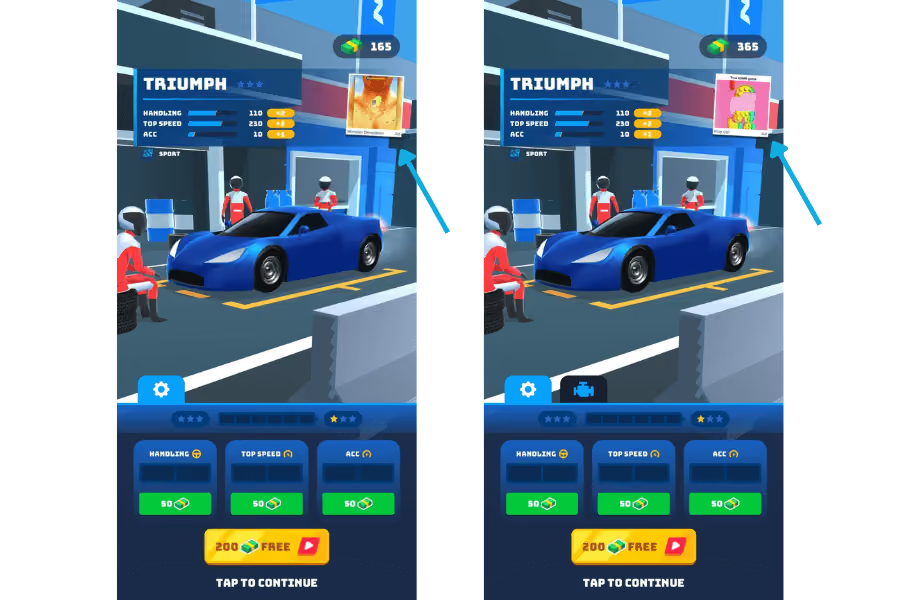
In most cases, when someone says mobile game cross-promotion, they are referring to native placements. These are built-in ad placements strategically positioned within the game’s user interface (e.g. the home screen). Native placements are the most popular form of cross-promotion for a few reasons:
The second option is cross-promoting through the more traditional in-app advertising approach. Just like you would host ads for other games, you can also promote your own games via interstitial ads, banners, or rewarded video ads. This means buying your own supply via ad networks, and while doing so comes at a certain fee, you end up with higher CPMs, increased engagement, and better ad-fill rates.

There’s a common belief that mobile game cross-promotion is only for hyper-casual games, but that’s due to the “game-hopping” tendency of these players. With hyper-casual gamers being generally less loyal and always looking for their next game, cross-promotion makes sense as a strategy to work with their habits rather than against them, and keep them within your game portfolio instead of losing them to competitors.
However, cross-promotion can work well for other game genres too.
The thing is, the success of mobile game cross-promotion doesn’t depend on the genre as much as on the size of the developer’s portfolio. This strategy is particularly effective for developers with many games – especially many games with similar unique qualities and styles – because they can move users between titles and help each game grow.
Moreover, cross-promotion works exceptionally well for studios with large player bases and games from the same category. For example, if a studio has multiple puzzle titles, it might be a good idea to try cross-promoting them, since the player clearly already enjoys puzzle games.
👀 Related reading: Fitting the pieces: Decoding trends and behaviors of modern puzzle gamers
Obviously, keeping players within your portfolio is the primary benefit of mobile game cross-promotion. But there’s more to this strategy than meets the eye.
Tapping into existing user bases is either completely free of charge or comes at a low cost (depending on if you take the native ad or IAA approach). As an alternative to traditional user acquisition, cross-promotion helps developers cut advertising costs and lower CPIs.
Cross-promotion enhances user retention and engagement by exposing players to new games they might be interested in, keeping them immersed in their app ecosystem.
Rather than fixating on the revenue and LTV of individual games, more and more developers are focusing on improving these metrics across their portfolios. Even a 5% increase in portfolio retention can lead to an incredible impact on overall revenue.
By tapping into the player bases of existing successful titles, cross-promotion can drive initial downloads and user engagement for new titles.
Privacy restrictions killed many forms of user-level targeting. However, cross-promotion remained unaffected. This means you can still keep track of users across your game portfolio and use data from one game to target those most likely to enjoy another.
Thinking about getting started with cross-promotion? Make sure you do it properly. The biggest challenge of mobile game cross-promotion is reaching the right users at the right moment with the right game from your portfolio – all without harming your game monetization.
Even though this may seem intimidating, as long as you stick to tried-and-true strategies and steer clear of the most common developer pitfalls, things should work out for the best.
As great and effective as mobile game cross-promotion can be, it’s not famous for having high conversion rates. The average conversion rate for cross-promotion is only 1% to 2% (GameAnalytics).
What does this mean for you?
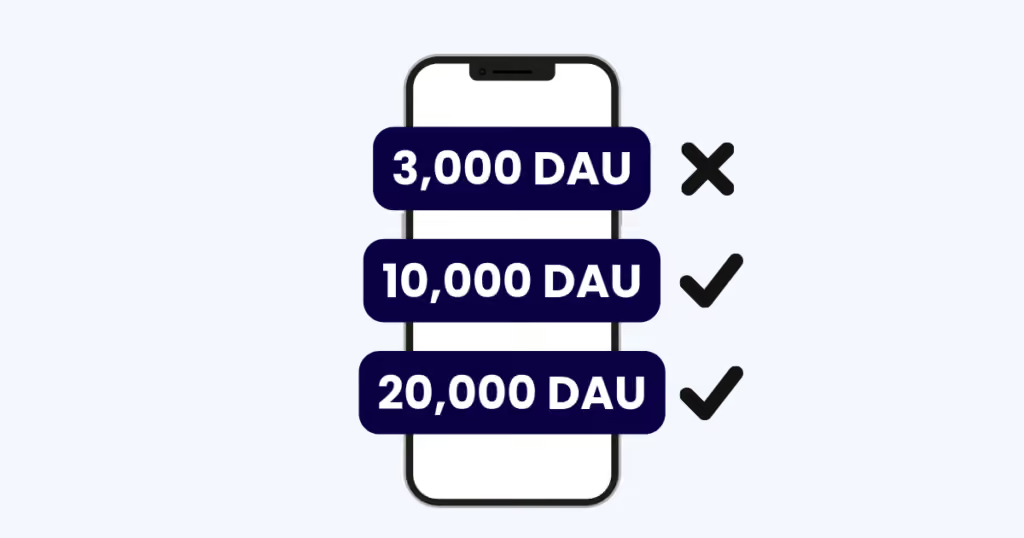
If a “mother” app hosting a cross-promotion placement has 3,000 DAU (daily active users), you’ll only get about 30 daily installs for the promoted game.
As a rule of thumb, when selecting games to run cross-promotions in, aim for those with at least 10k - 20k DAU.
If you cross-promote with games that have completely different audiences, you probably won’t get the desired results. Instead, you might end up with wasted resources, poor conversion rates, and friction with your user experience.
For instance, promoting a casual match-3 design title within a gritty RPG game is not a great idea. Match-3 games typically attract a mature female audience, while RPGs are more popular among young males.
Cross-promotion success depends on matching games appealing to the same player personas, fostering user retention and portfolio growth.
At some point, each user will churn from your game. This happens for all sorts of reasons – boredom, difficulty, poor user experience, lack of time to play, and so on. Of course, you want to delay this as much as possible, but it inevitably happens.
When launching a cross-promotion campaign strategy, it’s vital to monitor your churn rates in the core games. The ideal moment to cross-promote is right before players leave your game. When you identify these moments – such as reaching a new level, running out of lives, or completing a quest – serve users ads to try and retain them within your portfolio.
Once you’ve successfully moved a player from one game to another, keep an eye on their behavior. As users shift between your games, analyze how it impacts your overall LTV. Mobile game cross-promotion should positively influence your revenue and engagement metrics, not just new installs.
Besides knowing when and where to cross-promote, it’s equally important to know which users these ads should and shouldn’t reach.
First, exclude your most loyal, paying users with high LTVs. These users are precious to your game, and it doesn’t make sense to move them elsewhere. While they might behave similarly in another game, it’s a risk not worth taking.
Segment users and understand what each group can bring. Low-spending users might install your other games but are unlikely to start spending. Therefore, it’s also important to target users who fall in between – those open to spending but not so loyal that you’d risk losing a valuable user.
In a world with more and more privacy restrictions for mobile advertising, the popularity of alternative advertising strategies will continue to rise.
Mobile game cross-promotion is just one of the current mobile advertising trends. If you want to learn more about advertising trends and how to make the most out of your campaigns, check out our article: 5 mobile user acquisition strategies fueling growth today.
