

EN
April 12, 2026

Did you know that, despite its size, South Korea is the 4th largest market in the world by revenue? If you’re a mobile game publisher looking to grow, then South Korea is a market you shouldn’t overlook.
More and more mobile game advertisers and developers are looking to break into this thriving market, and to succeed, it’s important to understand its key trends and dynamics.
Let’s take a closer look at the state of mobile gaming in South Korea, from the most recent numbers to popular games and genres.
The South Korean mobile gaming market is the 4th largest global market by revenue. In 2025, it generated $5.3 billion in revenue and around 490 million downloads, according to Sensor Tower.
Of course, reaching these numbers means having a lot of mobile gamers.
South Korea has a population of 51 million people, and roughly 24 million of them are mobile gamers. This number keeps on growing, as current growth trends suggest that 800,000 new users will enter the market every year (adjoe, Statista, Airbridge).
The country is an Android-first market, with over 70% of downloads coming from Google Play. However, iOS is slowly on the rise. (Sensor Tower).
In 2025, the genres that dominated mobile gaming in Korea were RPG, Strategy, Action and Casual Games. RPG games are the absolute leaders in revenue, driving 47% of the total market revenue.
For example, in 2024, this genre generated $3.2 billion in revenue, 80% to 90% of which came from IAPs. Strategy games drove roughly $717 million, while casual games earned about $297 million (adjoe, Statista, Airbridge).
Which mobile game titles are most successful in 2026?
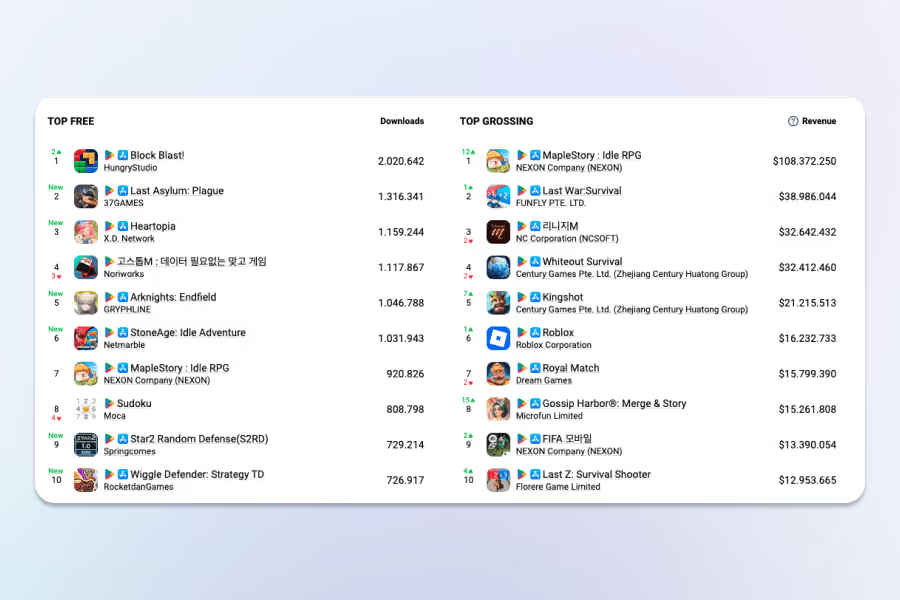
According to AppMagic, the top three mobile games by downloads came from Asian publishers. Like the rest of the world, Block Blast is the most downloaded title in the country. The rest of the list is made up of both casual and midcore games, with a strong preference for strategy and RPG.
The top-grossing chart includes a mix of titles from local (Nexon Company, NC Corporation) and global publishers. Some notable foreign games include popular 4x strategy titles Last War: Survival and Whiteout Survival.
This shows that South Korean players download and spend on both local and foreign games, as long as they are localized and match their interests.
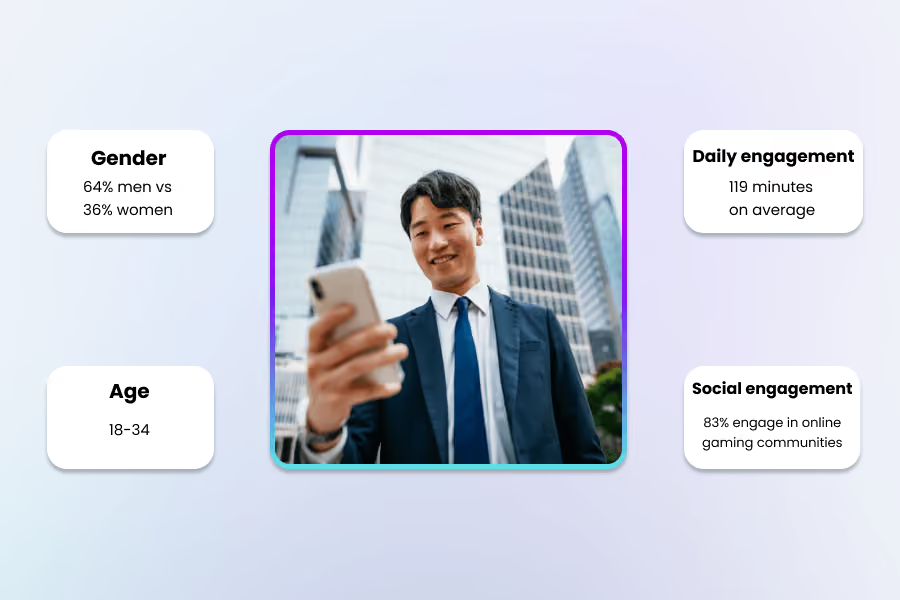
According to Sensor Tower, the majority of mobile gamers in South Korea belong to the 18-34 age bracket, with substantial engagement from both the younger (18-24) and older (35-44) generations.
Male players outnumber female players (64% vs 36%), and the average daily engagement is 119 minutes (Adjoe, Statista, Airbridge).
Unlike other countries, Korean mobile gamers are also more likely to engage in online gaming communities. In our previous research, we found that 83% of Korean gamers do it, compared to 65% of US players.
👀 Dive deeper: The impact of social and community factors for gamers in South Korea
Ok, you’re now familiar with the key numbers and popular games in the Korean gaming market. One question that arises next is—how to approach this market?
To answer this question, let’s take a look at the key characteristics that set the Korean mobile gaming market apart, and how you can leverage this.
Localization is non-negotiable when entering the South Korean market.
Korean players expect fully localized games, including culturally relevant content and marketing materials.
The first step is language localization. Korean is written in Hangul, a unique script read from left to right. Now, since each Hangul character often takes up twice as much space as an English character, this can cause layout issues. Instead of resizing fonts to fit translations, it’s recommended to use fonts like Dodum and Nanum, which are optimized for high readability.
The Korean language also comes with a unique grammar structure, different formality degrees, many synonyms, and borrowings from English and Chinese. Due to all this, we advise working with a native speaker on your game localization. Besides in-game content, make sure to translate your game’s title, subtitle, app store keywords, description and screenshots.
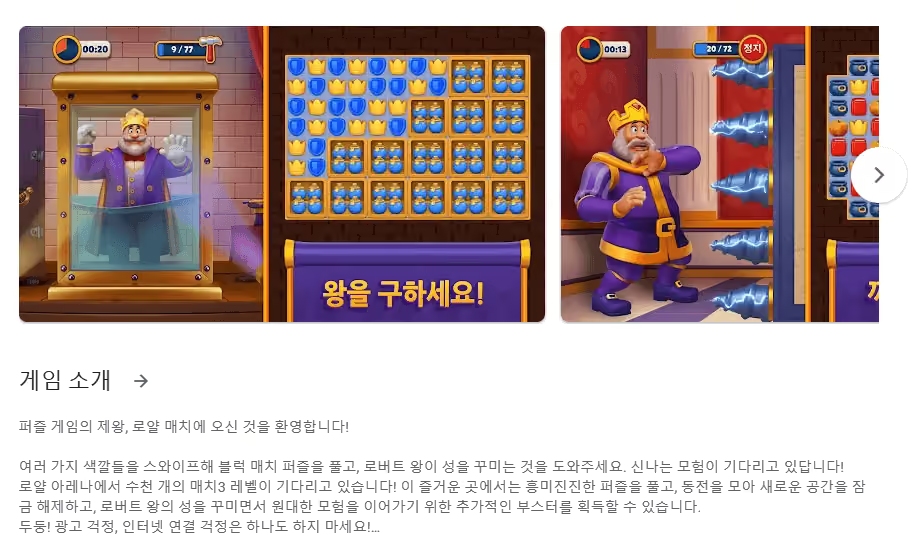
To further boost your chances with the Korean audience, make sure your visuals match local tastes. Generally, Koreans prefer vibrant, detailed designs with rich graphics. Similarly to the Japanese and their kawaii, they like games with cute, anime-style elements.
Colors matter too. In Korean culture, colors like white, blue, green, and yellow are considered positive, while black and red may have negative connotations. This is certainly something to have in mind when localizing your app store screenshots, icons, and ad creatives.
When it comes to culture, don’t forget about national holidays. While the biggest holiday in the Western world is probably Christmas, for Korea, the two biggest holidays are Seollal (Lunar New Year) and Chuseok (Korean Thanksgiving Day). This is very important for creating a LiveOps calendar with in-game events for Korean players.
Ultimately, a well-localized experience should lead to higher user trust, engagement, and loyalty.
According to our survey among South Korean mobile game spenders, players in this market are most likely to spend on boosting gameplay progression (66%) and personal enjoyment (49%). Their favorite types of IAPs are in-game currency (50%) and bundles (31%), while they are least likely to spend on loot boxes and cosmetic items. This tells us that Korean players are mainly driven by the desire to improve their gaming experience and achieve success in the game.
Social factors also play a major role in player spending. Korean mobile gamers are known for their passion for socializing and competing with other players. 29% of spenders stated that the top social factors that affect their spending include leaderboards, challenges, and rankings.
Therefore, game developers can take advantage of these preferences by adding more social features to boost competition and spending.
👀 Related reading: Global growth, local play: Mobile gaming behavior & trends across the US, UK, Korea, and Japan
Just like all things mobile gaming in South Korea, your user acquisition efforts should also include careful localization. In addition to global ad networks like Google Ads, AppLovin, and Meta, consider using local platforms such as Kakao and Naver for social promotion.
Besides traditional video advertising, rewarded advertising is also huge in the Korean mobile market.
“In Korea, reward-based advertising is booming. Advertisers prefer it, publishers earn more from it, and even PC sites are adopting it. This trend will only grow.” Josh Jang, Director of Sales for LoyaltyPlay South Korea
South Korean gamers are not only heavy spenders but also dedicate significantly more time to games. In fact, top-grossing titles in Korea drive 4-5x higher daily playtime compared to the average (adjoe, Statista, Airbridge).
High engagement usually means fertile ground for rewarded advertising (rewarded video, offerwalls). Rewarded ads offer players rewards for their time and engagement, and Korean players respond well to this exchange.
We’ve experienced this firsthand with the Mistplay Audience Network, our rewarded advertising platform. One notable example is how the Mistplay Audience Network helped a leading casual developer, Unico Studio, increase ROAS in Korea by 34%.
Mobile gaming in South Korea is booming, and it’s full of opportunities for mobile game developers. Meeting the specific demands of Korean users might take some time and effort, but the potential rewards make it worthwhile.
If you’re ready to try and enter this market, Mistplay can help. Specializing in rewarded advertising, we helped numerous developers reach Korean gamers and boost ROAS. Reach out to learn more about our solutions.