

EN
Banner ads have a trust problem. Users have learned to scroll past them without even registering they're there – a phenomenon known as banner blindness. If you're trying to get your app in front of the right users, that's a costly blind spot.
Mobile native advertising solves for this by blending in rather than standing out.
In this guide, you'll learn:
👀 Related reading: Scale your profits: The publisher’s guide to mobile app monetization
Native advertising is any ad format designed to match the environment it's placed in, both visually and functionally. Rather than looking like a typical ad, it looks and behaves like the organic content around it, so users can interact with it the same way they'd interact with anything else on the page or in the app.
The goal isn't to trick users, but to make sure your message shows up in a format that feels relevant, useful, and worth a user's attention, rather than something they instinctively swipe past.
Native advertising works the same way on mobile as it does on desktop, but mobile in-app advertising comes with a few differences worth knowing:
If you're building the case for native mobile advertising internally, here's the data to back it up:
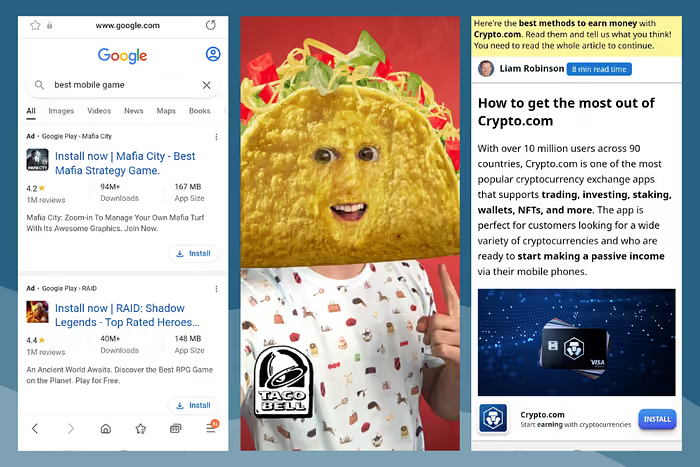
Native ads don’t come in one shape and size. On the contrary, they come in many forms that are wildly different from one another. In all of its forms, mobile native advertising can be an excellent way for users to discover apps.
Here is a quick overview of the most common types of mobile native ads:
We’ve already mentioned that native ads fight banner blindness and how high their engagement rates are. However, these are just the first two benefits on a lengthy list. Here are four additional reasons why you should consider investing in mobile native advertising.
Since mobile native ads don’t look like ads, they don’t come off as disruptive. Moreover, these ads carry great value.
Native ads don’t pressure users into taking action as soon as possible. Instead, they allow them to discover something they might find interesting. For example, mobile native ads frequently address some of the users’ pain points, and how the advertised app helps them solve them. While this might drive some users straight to the app store, others may memorize the app’s benefits and install it in the future.
Stories are a powerful advertising tool. With compelling storytelling, you can get the users’ attention, trigger curiosity and create an emotional connection. People don’t remember technicalities, but they recall how the interaction made them feel.
When users interact with a native ad and decide to visit the app store listing, they are usually well-informed about the app. For this reason, they don’t hesitate to hit the install button.
As a result, thanks to native advertising, apps can get better conversion rates in the app stores. Conversion rates are also one of the key factors determining app store rankings. If the app store recognizes that most users who visit your app listing install the app, this should consequently increase your ranking.
Native ads usually appear on platforms where users are most likely to find them interesting. For example, it’s positive if the host app and the advertised brand have similar user demographics, or if they gather people with similar interests. When users see content relevant to them, they are more open to it. This is also one of the reasons why native ads have such high click-through rates.
Despite a long list of benefits, mobile native comes with certain challenges.
Finding a well-performing native advertising strategy is challenging. In order for your native ads to work well, you need to create content that adds value to the user. Unlike native ads, banners are known to be cheap and easy to produce. They can be set up with a few bits of information from the advertiser, and they’re ready to go.
On the other hand, native ads usually require deeper customization. It doesn’t matter if they come in the form of an article, a survey, in-game content, or something else. If you want your native ads to be successful, you’ll need to do the double work of creating the content and carefully adapting it into the placement.
You need to be aware that this will cost you some time and money. But rest assured – ultimately, the results will make it all worth it.
It’s no secret that native ads are meant to differentiate from traditional ads. This is not just a benefit of native ads, but a potential drawback too. As an undesired effect, native ads can make users feel tricked into engaging with an ad. If this happens, they can develop negative feelings toward your brand.
Luckily, you can prevent this from happening. As long as you’re transparent about the nature of your content, you should be fine. Again, finding the perfect way to do this will require some time and testing.
Measuring ROI and performance for native ads is a challenge of its own. It would be unfair to define the success of a native ad by the number of clicks and conversions it delivers. In native advertising, experience and engagement are more important than conversions.
What separates a great native ad from an average one? To help you answer this important question, we’ve compiled a list of best practices in three separate areas of native advertising.
That’s it, these are some of the most important things you should know about mobile native advertising.
Ready to put mobile native advertising to work for your app? Mistplay can help you scale distribution and grow your user base through native, rewarded ad experiences that users actually want to engage with. Learn more about our decade-proven rewarded UA model and reach out to get started.