

EN
.avif)
If you’ve spent time in game dev communities, you’ve probably seen some uncertainty around paid user acquisition. We understand why. If you’re an indie developer or you’re running a small studio, spending money to buy installs can sound like a risky move, and you may be concerned about getting a negative reputation from mobile ads.
However, when done strategically and measured properly, paid user acquisition is one of the most effective growth levers for apps and games.
In this article, we’ll break down what paid user acquisition is, why it’s nothing to fear, and how you can use it to grow your game sustainably.
👀 Related reading: Paid user acquisition vs organic user acquisition: How to find the right balance
At its simplest, paid user acquisition means investing money to get new users for your app or game. Instead of waiting for players to find you organically through word of mouth referrals, social media, or online communities, you can give your game a boost with targeted paid acquisition campaigns that put your titles in front of users most likely to be interested.
Think of it as the difference between opening a new shop in the city center and hoping passersby notice it, versus orchestrating a grand opening with flyers, social media ads, ribbon-cutting ceremony, and even local influencers to make sure people actually show up.
In mobile marketing terms, this means paying for installs or app interactions through channels like social ads, app store ads, offerwalls, or influencer sponsorships.
The key point is that you need to think of paid UA as an investment. When measured properly, it can bring in high-value players, generate positive return on ad spend (ROAS), and unlock growth that organic strategies simply can’t match. In other words, paid user acquisition is less about “buying downloads” and more about accelerating your game’s path to visibility and profitability.
👀 Related reading: Mobile user acquisition: The modern developer's guide
While paid user acquisition is such a powerful growth lever, there are still developers who hesitate to invest, and this is mainly due to common misconceptions.
Here are the most frequent reasons we hear around mobile app developers being hesitant to adopt paid user acquisition strategies:
Many indie developers assume you need a six-figure budget to even start. Though it’s true that big companies invest heavily in paid user acquisition, in reality, you can launch small test campaigns with just a few hundred dollars to see what works before investing more money. Plus, the goal of paid UA is to generate ROAS – which means if you find the right channel with the right users, you’ll be earning back more money than you’re spending on your campaigns.
It’s true that giants like Supercell or Scopely spend millions, but that doesn’t mean smaller studios can’t compete. With smart targeting, creative ad formats, and a clear KPI framework, even a smaller budget can bring high-quality users.
This one might have been true years ago, but today, paid user acquisition is one of the most trackable strategies out there. You can measure every install, track retention, and calculate your return down to the decimal. That means that when you launch campaigns, you’ll have the detailed data you need to understand what channels, creative, messaging, and more is working (and which is not) so you can optimize for ROI.
Now let’s take a look at what paid acquisition campaigns actually include. Like many things in mobile app marketing, there’s no one-size-fits-all approach, and you can (and should!) design campaigns around your budget, goals, app type, unique brand identity, and the type of players you want to reach. However, there are some consistencies across the mobile UA landscape to keep in mind when planning your paid acquisition strategies.
Here are the most common paid UA channels: for mobile
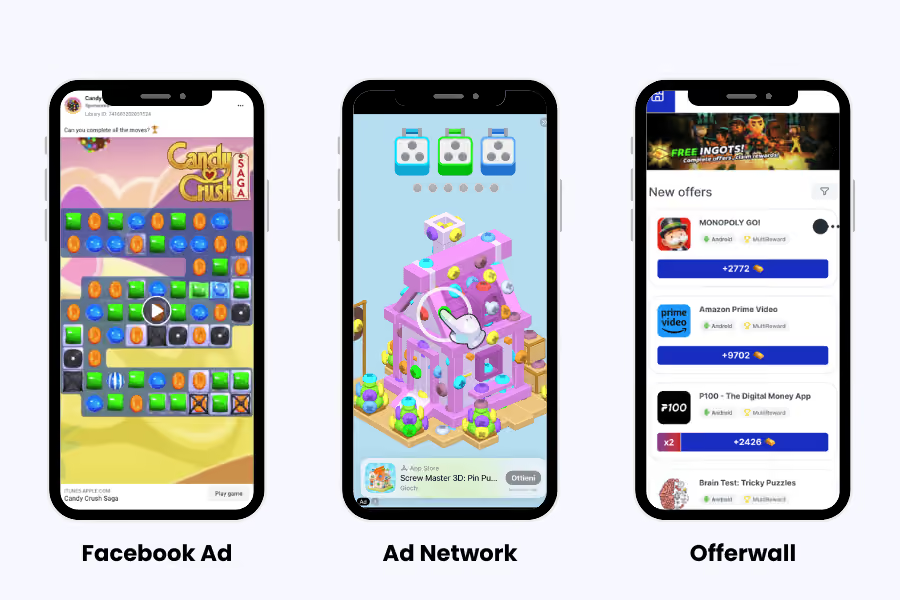
But it’s not only about where you run paid acquisition campaigns, but also how you set them up:
A good paid user acquisition campaign is part art, part science: you combine creativity with data-driven decisions, making sure every dollar spent moves you closer to sustainable growth.
One thing that keeps developers from investing in paid user acquisition is thinking that app store optimization (ASO) is often enough.
Though this has been true in some cases, paid UA has now become essential. You can think of ASO as setting the stage, and paid UA as turning on the spotlight. The answer isn’t one or the other, but both:
Here’s the part that turns paid user acquisition from “scary expense” into “predictable growth engine.” In fact, the most successful campaigns track a set of clear metrics that show whether the money spent is paying off.
The key ones are:
By monitoring these KPIs closely, you know exactly when to keep investing, when to adjust, and when to stop underperforming campaigns.
Of course, tracking all this data can feel overwhelming at first. So, relying on a Mobile Measurement Partner (MMP) can help you here. MMPs are designed to help app developers measure campaign performance across multiple channels. They act as a single source of truth: they attribute installs to the right campaigns, prevent double-counting, and give you the full picture of your UA ROI.
And this is where the fear around paid UA usually fades: once developers see the results tied directly to the spend, it stops feeling like “throwing money away” and starts feeling like an investment they control.
👀 Related reading: 8 crucial user retention metrics to track for your mobile app
Paid user acquisition doesn’t need to be intimidating. By defining clear KPIs, starting with manageable budgets, and combining your campaigns with strong ASO, you can build a steady pipeline of high-value users.
The key is to treat paid UA as an investment in your app’s future. So if you’ve been holding back, start small. Test one channel, track the results, and let the data guide your next step. Because once you see the numbers working in your favor, you’ll realize: there’s nothing to be scared of.
If you’re looking to scale your game or app even further, Mistplay is here to help with a decade-proven rewarded gaming model for paid UA. Learn more and contact us today about getting started.
