

EN
November 6, 2026

game-advertisers
Many advertisers consider Japan the land of high-value players, and for good reason: Japanese players stand out for their strong engagement and high spending.
According to Sensor Tower, Japan ranks second in revenue in the APAC region ($10 billion), despite being ninth in the number of downloads (585 million). And when we surveyed Japanese players for our report on Japan gaming, 53% of them said that they make in-app purchases, with one in five of those purchasers spending ¥10,000 ($63 USD) or more per month.
So it’s no surprise that game advertisers all around the world aim to enter Japan, but you need a local approach to do this properly. As Tetsu Watanabe, Director of Sales for LoyaltyPlay in Japan, put it in a previous article:
“One of the important things to understand is that Japanese people are skeptical of new, non-Japanese things. Because of this, marketers need to improve their products based on feedback from Japanese users.”
This was also the starting point of a Tokyo panel hosted by Mistplay during Game Future Summit 2026. The discussion brought together four industry professionals: Kazuhito Yokogawa, Producer at Bushiroad Inc.; Yuduki Sato, Marketer at Bushiroad Move Inc.; Yasuhiro Yamaguchi, Operational Lead at DIGIMERCE Inc.; and Yuichi Nakamura, Senior Account Executive at Mistplay.
They discussed what makes a good user, what’s the best way to go after them, and how to measure if you’re succeeding.
Here’s what you can learn from that conversation.
While each perspective was different, the panelists shared one belief: sustainable growth in Japan depends on attracting players who engage over time and contribute to a game's long-term success.
However, relying on a single definition of a good user isn’t beneficial, since that also depends on what you want to achieve with your game. For example, the Bushiroad team tracks LTV for mid-core titles and ROAS and low cost per install for hybrid-casual. Whereas for Yamaguchi, representing the rewarded app Me and the Planetary Farm, a good user is one who can earn through the game and generate revenue for the business.
Advertisers and studios need to do their part as well. While Japanese players can be extremely loyal to a particular franchise – with 52% of players focusing on just one to three mobile games per week – they are also on the lookout for fresh in-game releases and mechanics.

“Users who keep playing are the best, and also users who really energize the community. But we have to provide the material that gets the community talking.” – Kazuto Yokogawa, Producer at Bushiroad Inc.
It’s a balance between two forces: players will continue to engage, but you must make sure that they have enough new in-game content to do so.
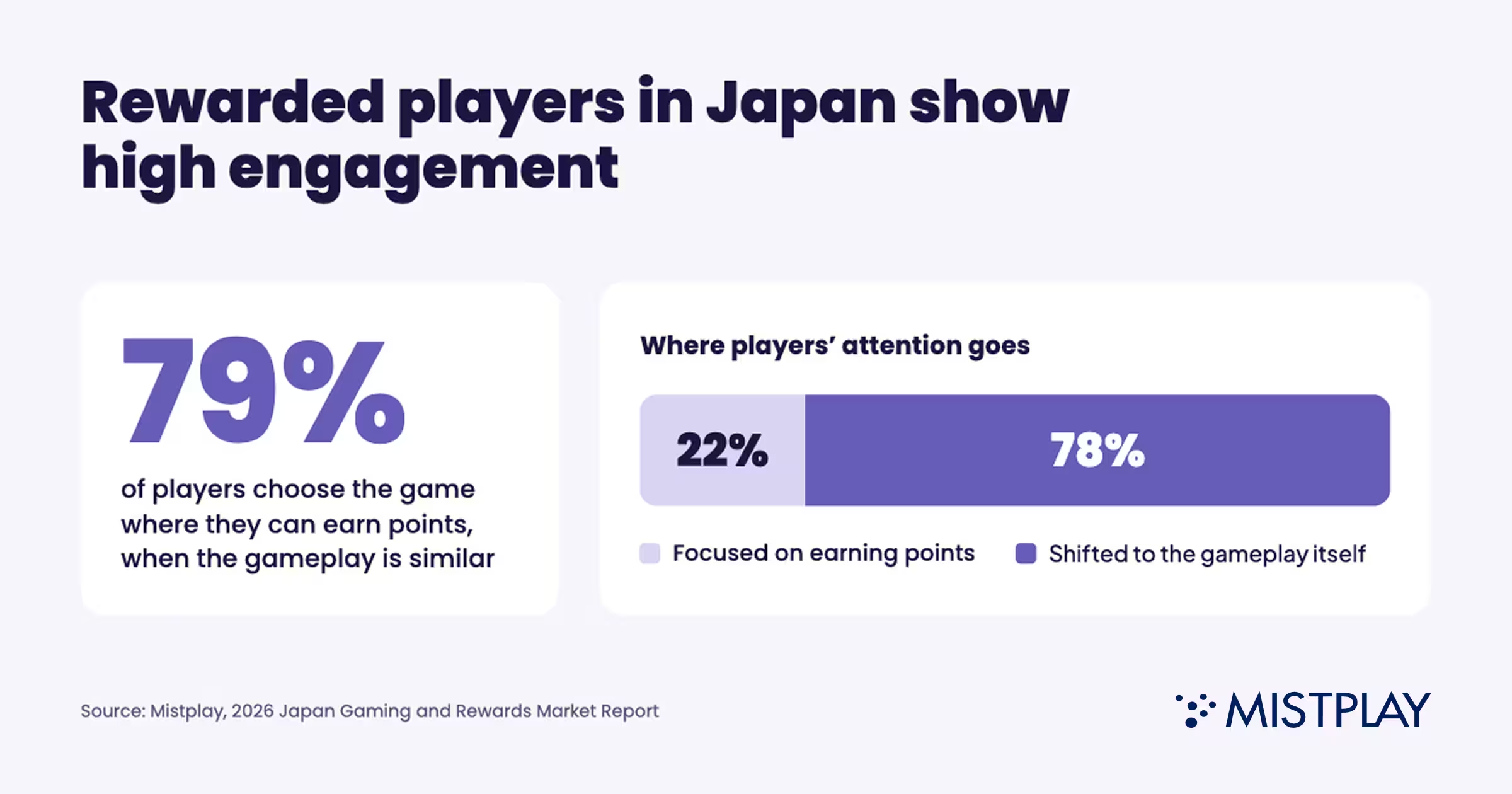
When talking about Japanese high-value players, rewarded users deserve a mention on their own. Japan’s Poikatsu culture – the habit of accumulating loyalty points – makes Japanese users very receptive to rewarded mechanics: 79% of players surveyed by Mistplay said that, if the gameplay is similar, they will explicitly select the title where they can earn points.
However, don’t assume that someone motivated by rewards is necessarily less interested in the game itself. Among the Japanese players surveyed by Mistplay, only 22% of the players said to be focused on earning points, while the remaining 78% shift their attention to the gameplay itself. In other words, rewards can work as a hook, but the gameplay is the reason for them to stay.

“Even users who come in for the points can have high retention and high ROAS, so the key for us is nurturing good users” – Yuichi Nakamura, Senior Account Executive at Mistplay
👀 Deep dive into Japan’s Poikatsu habit: 2026 Japan Gaming and Rewards Market Report
If your goal is to acquire Japanese players, an audience-first approach should guide both your advertising campaigns and the onboarding session of your app or game, and the panelists agreed on this point.
In particular, they stressed the importance of designing a UA campaign with your ideal user in mind, because targeting too broadly can lead to failure.

“When you build a product, it’s better to narrow down the target. That’s what both experience and the numbers show. Trying to hit every segment tends to lead to failure.” – Yuduki Sato, Marketer at Bushiroad Move
Japanese audiences are known to be strong supporters of domestic titles, especially when they belong to popular franchises. In fact, looking at the highest-grossing titles in Japan, you’ll notice that the majority belong to Japanese studios.
For studios outside Japan, adopting a local approach can also translate into licensing and IP collaborations that can help you capture the loyal hearts of Japanese players. This is what major gaming studios do on a regular basis: Netmarble’s The Seven Deadly Sins: Origin, which is based on a Japanese manga series, earned 59% of its mobile revenue in Japan in its first month. Meanwhile, Shift Up’s NIKKE almost doubled its daily revenue on the first day of its Evangelion collaboration.
The Bushiroad team shared a similar story about the launch of their IP game, HUNTER×HUNTER NEN×SURVIVOR, and how they adjusted its targeting as the game moved from launch to live operation. Before launch, their creative strategy focused on fans of the HUNTER×HUNTER IP, using new illustrations and original animation to attract people already familiar with the franchise. After launch, the team expanded its reach to players interested in the survivor-action genre.
As mentioned above, the game experience still needs to do its part. The panelists highlighted that daily rewards, weekly missions, regular in-game events, and win-back campaigns are effective ways to maintain engagement. For IP games, introducing new ways to play while preserving the identity of the original franchise can give players another reason to return.
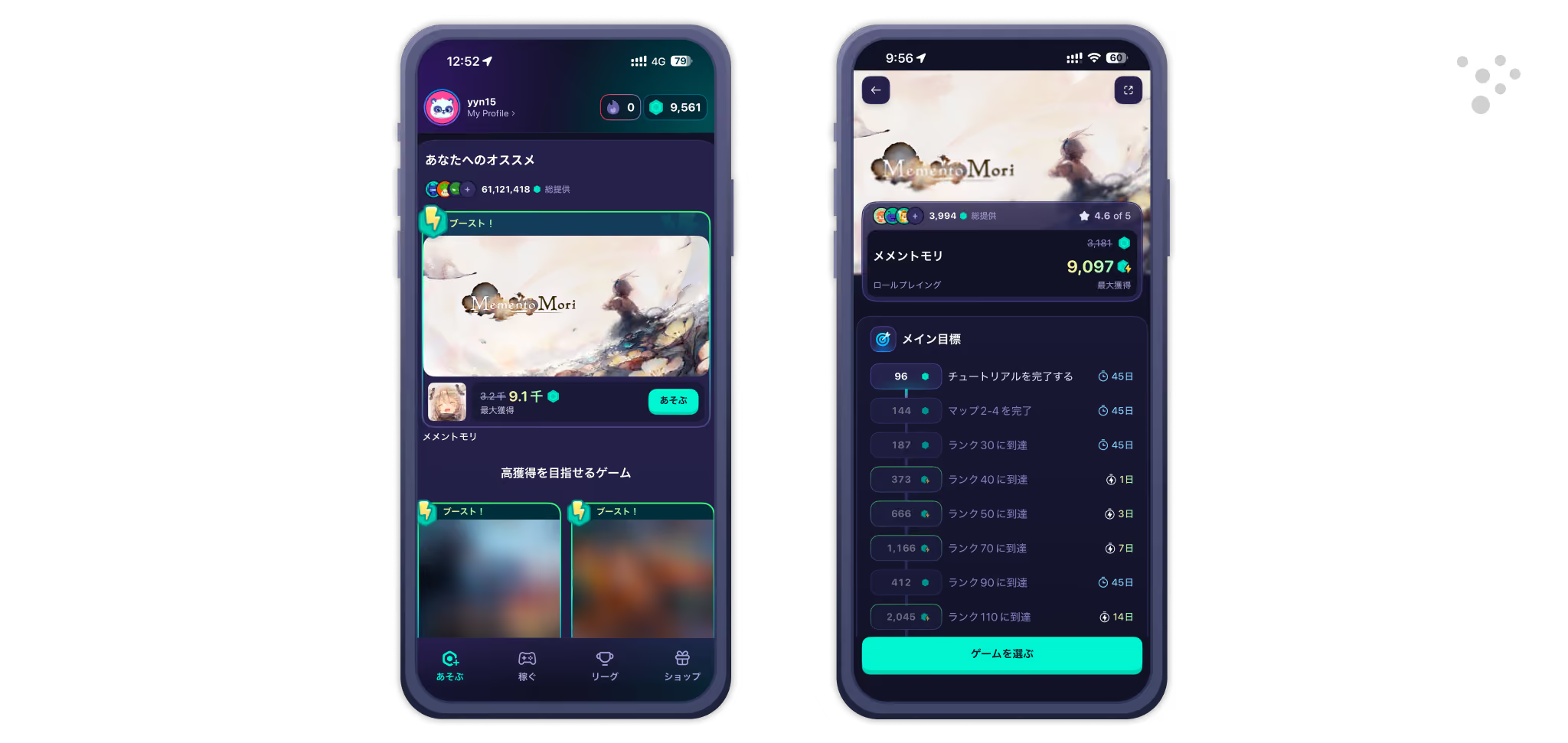
If instead you’re running a rewarded campaign, pay attention to its structure. 85% of Japanese players surveyed by Mistplay said that earning points for reaching specific in-game milestones increases their playtime, so giving them a clear path to the reward can increase their overall engagement.
The latest data from Mistplay’s Playtime Events campaigns confirm this as well. Compared with playtime-only reward economies, Playtime Events – which combines playtime rewards and in-game milestones – achieved an average 28% higher D45 ROAS and 14% higher D45 retention rate, with peaks of +77% D45 ROAS for Strategy games.
👀 Learn more about Playtime Events here
There’s no single formula for acquiring high-value players in Japan. Success comes from understanding what motivates local audiences, targeting the right players, and giving them compelling reasons to keep playing. For advertisers, the challenge is turning these insights into a UA strategy that drives lasting growth.
If you’re looking to put these strategies into practice, Mistplay offers a way to reach and engage Japanese mobile gamers through rewarded campaigns. Now available on both Android and iOS, Mistplay helps advertisers connect with Japanese players through rewards that encourage gameplay and progression, with a focus on driving long-term engagement.
Read Mistplay's 2026 Japan Gaming & Rewards Market Report to understand local player motivations and the role of rewards in mobile gaming. And if you're looking to grow your game in Japan, let's talk.
Sources: