

EN
If you’re tired of interstitials and you’re looking for an ad format that drives engagement, look no further: you’ve just run into playable ads.
In 2024, top mobile game advertisers spent 35% more of their ad budget on playable formats compared to interstitials, and for a good reason. These interactive ads delivered conversion rates up to 16 times higher than non-playable formats.
In this guide, we explain why playable ads work and whether they’re really worth the investment.
👀 Related reading: From models to metrics: A publisher’s guide to mobile game monetization
Playable ads are interactive mobile ads that let users try out an app or game before downloading or purchasing it. These ads often replicate a core part of the app experience. For mobile games, this might mean letting users complete a short puzzle or play a mini-level. For non-gaming brands, it could be a swipe-based demo, quiz, or interactive walkthrough.
Think of it like getting a free sample at the supermarket: just as you might taste a snack before buying the full box, playable ads let potential users “test-drive” your app or game in an engaging way.
This interactivity is the key difference between playable ads and traditional formats, like banners or interstitials, which instead deliver content passively.
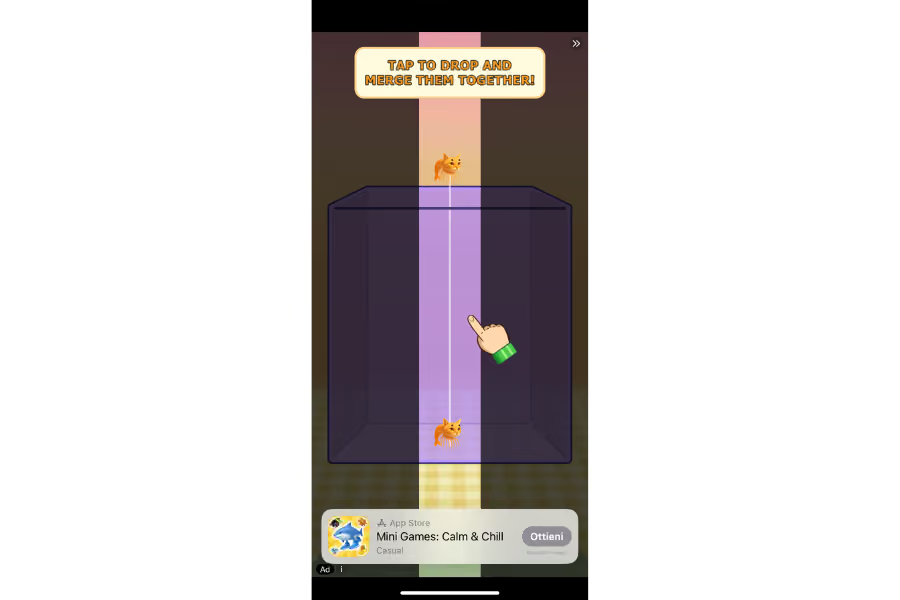
Playable ads are made of three main components:
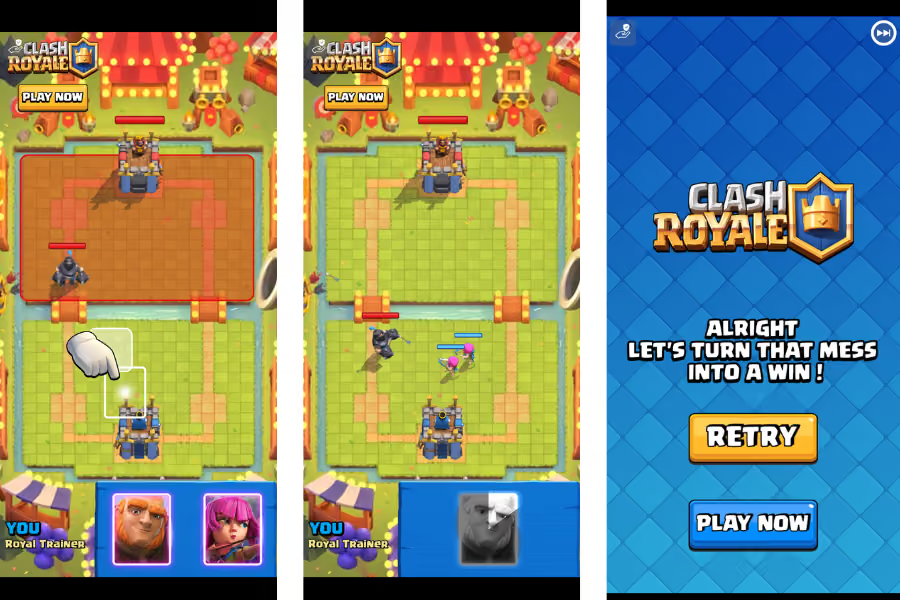
However, not all ads are built in the same way, and the two main types of playable ads are:
HTML-based playable ads are fully interactive mini experiences built with HTML5, CSS, and JavaScript. Essentially, they’re mini web apps embedded inside an ad unit that allows direct interaction with the ad viewer. When someone sees the ad, they can tap, swipe, or drag directly inside it.
This type of playable ad is basically video ad with clickable elements. They play like a regular video, but at certain points, viewers can make a choice, like tapping a button to play a move, answer a question, or explore a feature.
While video-based playable ads are not as flexible as full HTML, they are faster to produce and work well on platforms with limited interactive support.
Playable ads have higher engagement and conversion rates. According to a playbook by IAB, around 1 in 5 consumers will engage with this ad format and spend time with your brand.
Recent data shows this too. Liftoff demonstrated that in 2024, playable ads generated 8 to 16 times more impressions-to-install than non-playable ad formats.
So, why do they work?
Moreover, every interaction inside a playable ad can be tracked.
Because most are built in HTML5, you can capture valuable metrics like:
This helps advertisers learn what users care about, test different flows, and optimize based on real behavior, not just impressions or clicks.
Yes, playables are powerful, but we would be lying if we said that there are no cons at all. Like everything, there are some downsides to them as well.
First, they take more time and resources to build. If static or video ads are quite easy to create, playable ads require more effort, especially the HTML5 versions. Playables need to work seamlessly across screen sizes, platforms, and operating systems.
Then, not every platform supports full-feature playables. Some networks have file size limits or restrict certain interactive elements, which can limit how creative you can get.
However, if you have the resources and technical ability to develop them, they’re still worth a chance, since they show overall better results.
As we said earlier, creating this kind of ad requires more technical knowledge than other formats. We can divide the development process into three main steps:
The first step is to define a storyboard that illustrates the user flow.
A playable ad is made of three main components:
In this phase, you should also gather all the necessary visual and audio assets that you will later need in the development phase: backgrounds, buttons, logos, sound effects, etc. Remember to optimize for lightweight delivery.
This is when things get a bit technical. Playable ads are typically built using HTML5 to ensure they run in mobile web views across ad networks.
Here are some tools you can use:
Once you’ve developed your ad, it’s time to optimize it.
Finally, remember to integrate tracking SDKs or custom events to measure the performance of your ad. You can measure different things for each section of the ad:
Before publishing it, it’s better to test the ad on different platforms and ad networks to ensure smooth performance. Ad networks like Meta, Google, Unity and AppLovin usually provide a testing environment, where you can check if everything works. For example, inside the Meta Developers Tool, there is Facebook’s Playable Preview Tool, which checks for errors for Facebook playable ads.
Once you’ve finalized your testing, it’s time to deploy your ad. Package the ad as a .zip containing:
Then upload it to the ad network’s console or integrate it into a mediation platform.
The try-before-you-buy approach is one of the reasons for the success of playable ads. Let’s see how different games (and apps) have implemented this!
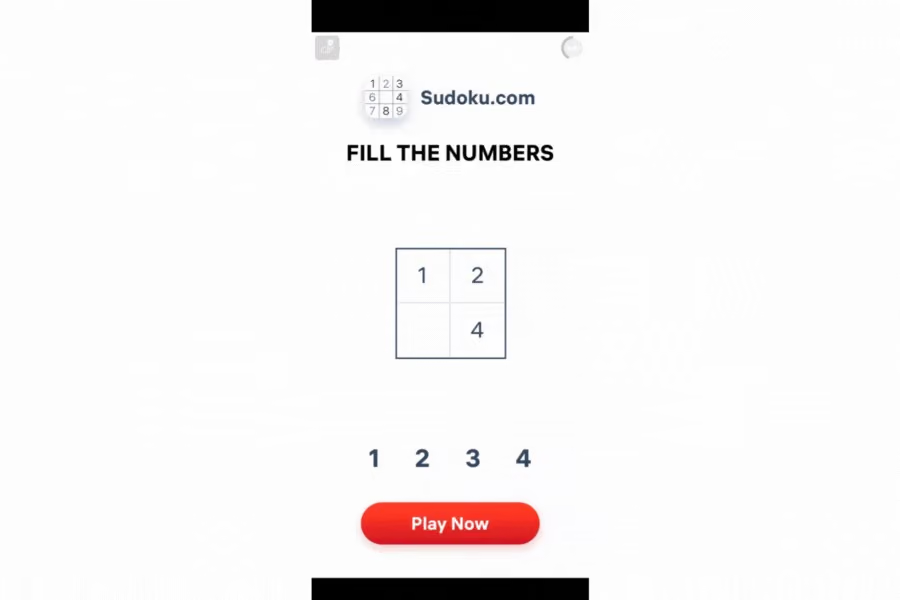
Sudoku.com challenges you to solve this puzzle between levels of another game. This is a great way to get players to interact with the ad. It turns the ad into a challenge (are you able to solve the puzzle?), which instantly lures users in.
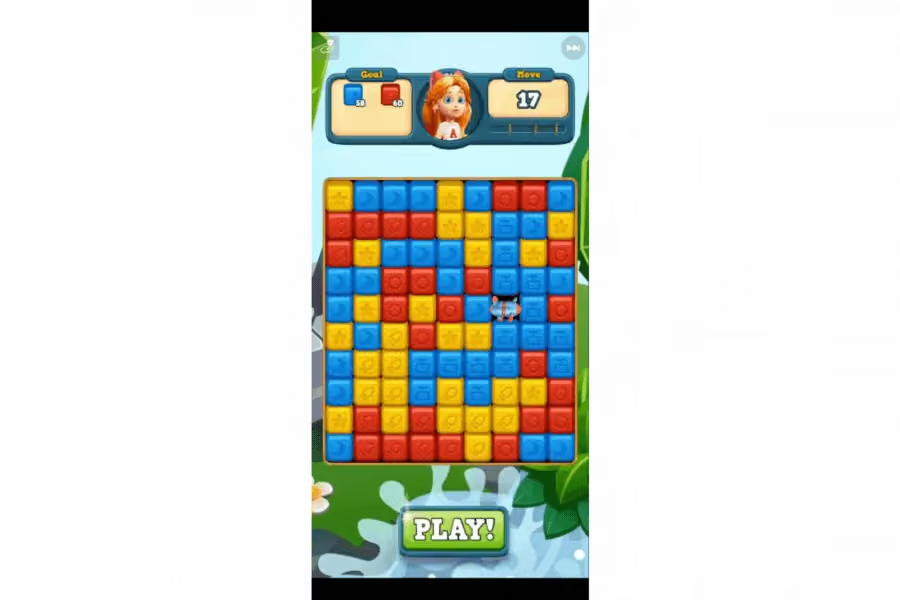
Match-3 games, like Toy Blast, make great use of playable ads. The game dynamic is always the same: you match 3 pieces to clear space. This simple mechanic translates perfectly into interactive ad formats. Players can instantly grasp the objective, experience the core gameplay within seconds, and often feel a small sense of accomplishment.
But playable ads aren’t just for games. Even non-gaming brands are using them to drive engagement.
McDonald’s often runs campaigns based on playable ads, which consist of mini games that lead players to try their app or redeem an offer.
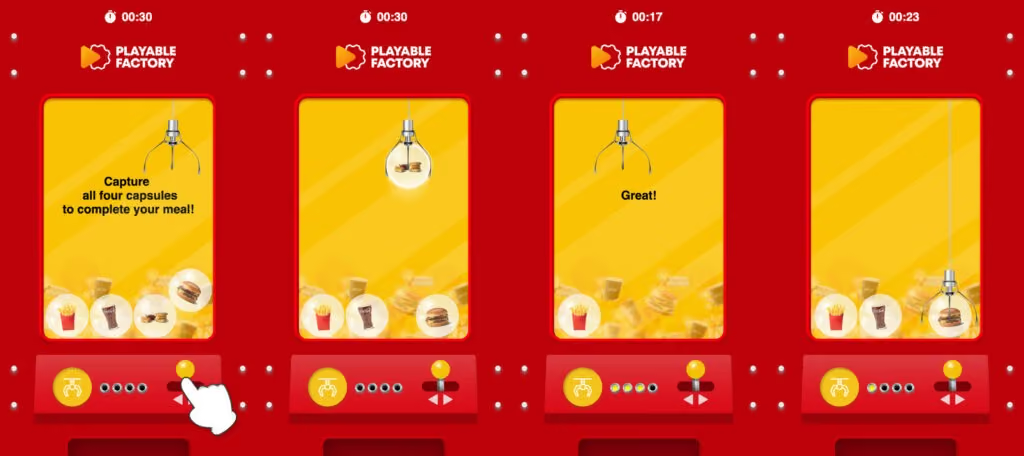
Why do playable ads work here, too? They make perfect use of the principle of gamification, the use of game-like elements in non-game contexts to encourage participation. By turning a simple promotion into an interactive challenge, brands create a sense of reward, curiosity, and fun.
If ads like banners and interstitials seem to be on the decline, that’s not the case for playable ads. With conversion rates higher than other static formats, playable ads grab attention, drive engagement, and give users a taste of what you’re offering before they commit.
Yes, they take more work to build, but in return, you get higher conversion rates and better insights into what your audience actually responds to. Looking to supercharge your mobile game UA? Reach out to us to learn about our decade-proven rewarded UA model.