

EN
CPE, or Cost per Engagement, is a pricing model used in user acquisition campaigns for mobile apps. In this model, app advertisers pay only when users complete specific post-install events they select to optimize for within the campaign.
The choice of these events differs based on the advertisers’ goals.
Some examples include:
Cost per Engagement is calculated by dividing the total advertising spend by the number of completed engagements in the campaign.
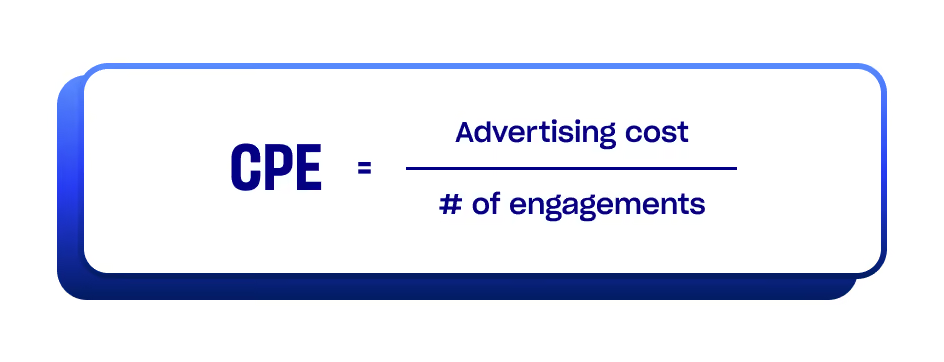
Let’s say as an app advertiser, you want to acquire users who spend at least 7 minutes in the app on the day they install it. If you invest $8000 in your CPE campaign and acquire 500 users who reach that goal, your CPE is $16.
The CPE model shares similarities with the CPA (Cost per Action) model, but with a few key differences. While CPA actions primarily revolve around purchasing events (like IAP), Unlike CPE prioritizes non-purchase engagement events. The primary difference is that CPE prioritizes in-app engagement, while CPA prioritizes in-app spend.
CPE campaigns most commonly appear in rewarded advertising, which is a form of user acquisition where users earn rewards by completing specific actions.
Commonly, these campaigns reach users through offerwall advertising or specific rewarded apps.
Offerwall ads provide users with a list of actions they can take to earn certain rewards. Since they are completely opt-in and rewarding, these ads usually drive high-quality users, showing high ROAS and retention rates.
If you want to acquire quality users at scale, get started with Mistplay, the pioneer of play-and-earn.




.avif)

.avif)